

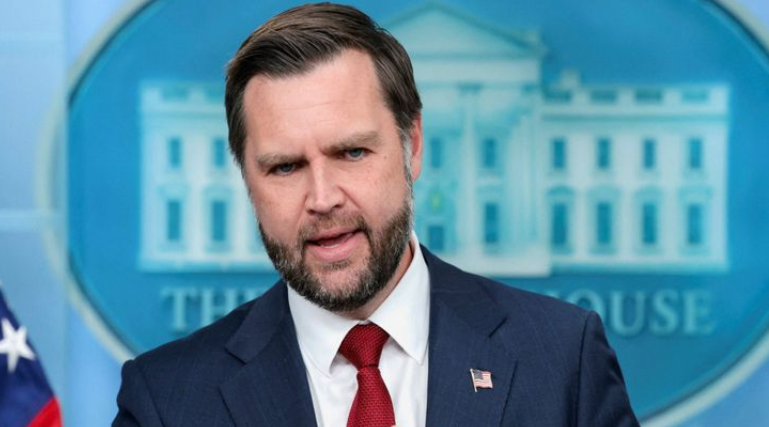
4 September 2026 Punjab Khabarnama Bureau : US Vice President JD Vance has said China is “willing to play ball” with Washington as the Trump administration seeks to economically isolate Iran, while describing Beijing as “much more responsible” than Tehran.
Vance made the remarks during a White House media briefing on Thursday as the United States stepped up pressure on Iran under its “Operation Economic Outcast” campaign.
Vance Says China Is Cooperating
Asked whether the US campaign could succeed without China’s participation, Vance said the People’s Republic of China was willing to cooperate with Washington.
He acknowledged that the United States and China continue to have policy disagreements and differences in their interests, but said the relationship between President Donald Trump and Chinese President Xi Jinping remained an important factor.
Vance stopped short of saying that Beijing had agreed to every US demand.
‘More Responsible’ Than Iran
Vance contrasted China’s approach with Iran’s actions, particularly Tehran’s alleged attacks on commercial shipping.
He argued that China is not the kind of country that would attack commercial vessels simply because it was unhappy with the outcome of an international dispute. Vance therefore described Beijing as “much more responsible” than Iran.
The remarks represent Washington’s assessment of the two countries’ conduct and do not indicate that China has fully aligned itself with US foreign policy.
US Seeks to Isolate Iran Economically
The comments came as the Trump administration pursues Operation Economic Outcast, an effort to cut Iran off from international financial and commercial networks.
Washington is seeking cooperation from countries that maintain important economic relationships with Tehran, particularly those involved in Iranian oil exports and other trade.
The campaign is intended to increase the economic cost of Iran’s actions while limiting its ability to finance military and nuclear activities.
China’s Role Is Crucial
China is particularly important to the US strategy because it has historically been a major buyer of Iranian oil and an important trading partner for Tehran.
Winning at least partial Chinese cooperation could therefore make Washington’s economic pressure considerably more effective. However, Vance’s comments indicate that Beijing is cooperating only to some extent rather than accepting the entire US agenda.
Washington Keeps Pressure Options Open
Vance also made clear that the administration is not relying solely on economic measures.
He said the president’s “toolkit” includes economic, military, diplomatic and covert pressure, while declining to disclose which measures Washington might use next.
The statement leaves open the possibility of further US action if tensions with Tehran escalate.
Shipping and Strait of Hormuz at the Centre
The US campaign is closely linked to the continuing confrontation over the Strait of Hormuz, a crucial route for global energy shipments.
Vance said Washington’s objectives include protecting commercial shipping, keeping global energy supplies moving and preventing Iran from rebuilding its nuclear capabilities.
The conflict has already sharply reduced oil shipments through the waterway and contributed to pressure on global energy markets.
Iran Rejects US Pressure
Tehran has rejected Trump’s latest economic threats.
Iranian officials have described Washington’s strategy as a continuation of failed policies and have pushed back against the US campaign to isolate the country economically.
The standoff comes after months of military confrontation and intermittent diplomatic efforts.
China Faces a Delicate Balance
Beijing’s position is likely to remain closely watched.
China has strategic and economic interests in maintaining relations with Iran, but it also has significant economic and diplomatic interests in managing its relationship with Washington.
Vance’s remarks suggest the Trump administration believes China can be persuaded to limit at least some forms of economic support for Tehran without necessarily becoming a formal participant in the US campaign.