

26 Aug 2026 Punjab Khabarnama Bureau : The Union government is closely monitoring seasonal influenza trends across India through a nationwide surveillance network, with health authorities saying there is currently no cause for panic and no evidence of a new or unusual influenza strain.
H1N1 Showing Expected Seasonal Pattern
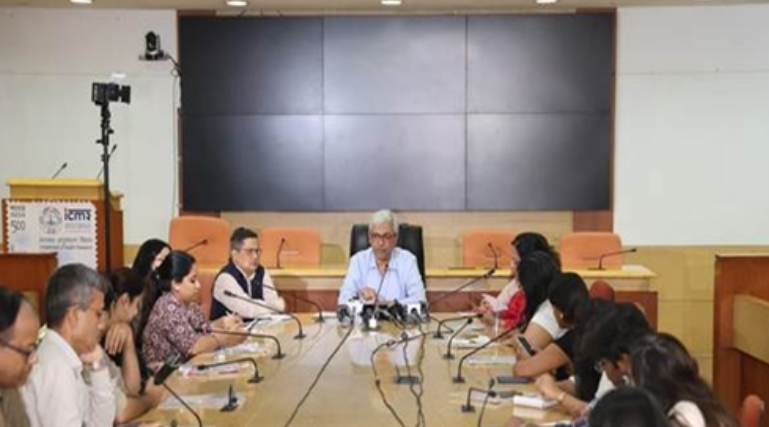
Secretary of the Department of Health Research and Director General of the Indian Council of Medical Research (ICMR), Dr Rajiv Bahl, said the influenza viruses currently circulating in India are consistent with seasonal patterns seen in recent years.
Authorities said the current observations do not indicate the emergence of a new influenza threat.
No Unusual Genetic Shift Detected
The government’s genomic surveillance has identified the circulating Influenza A (H1N1) viruses as A/Missouri/11/2025 (H1N1) pdm09-like viruses.
The viruses belong to clade 6B.1A.5a2a, subclade D.3.1.1. According to ICMR, this lineage has been circulating in India since 2025, while the genetic changes observed are consistent with normal seasonal antigenic drift.
73 Laboratories Monitoring Virus Activity
The ongoing surveillance is being carried out through a network of 73 DHR-ICMR Virus Research and Diagnostic Laboratories (VRDLs).
The network is being used for epidemiological, virological and genomic surveillance, allowing authorities to monitor changes in influenza activity, circulating strains and disease severity.
Seasonal Influenza Usually Mild
Health authorities said seasonal influenza, including H1N1, is generally a mild and self-limiting respiratory illness in otherwise healthy people.
Common symptoms include fever, cough, sore throat, headache, body ache, fatigue and weakness. Most people recover with supportive care, adequate rest and hydration.
Some Groups Face Higher Risk
While most cases remain mild, certain people are more vulnerable to complications.
These include older adults, young children, people with underlying medical conditions or co-morbidities, and those with compromised immunity. Authorities have advised people in these groups to exercise greater caution and seek medical advice if influenza-like symptoms develop.
Government Advises Routine Precautions
The Health Ministry has advised people to follow basic respiratory hygiene and infection-prevention measures.
People should cover their mouth and nose while coughing or sneezing, wash their hands frequently, stay home when unwell and avoid close contact with others while experiencing symptoms.
Avoid Unnecessary Medication
Authorities have also cautioned people against taking antivirals or antibiotics without medical advice.
Those experiencing severe, persistent or worsening symptoms should consult a healthcare professional and follow medical advice regarding testing or treatment.
No Need for Panic
The government has emphasised that the presence of H1N1 does not automatically mean severe illness or hospitalisation.
Officials have urged the public to remain informed and vigilant, but not alarmed, while surveillance continues across the country.
Surveillance to Continue
The Union Health Ministry, Department of Health Research, ICMR and National Centre for Disease Control will continue monitoring influenza trends.
Authorities will track circulating strains and disease severity to ensure any significant change is detected and addressed promptly