

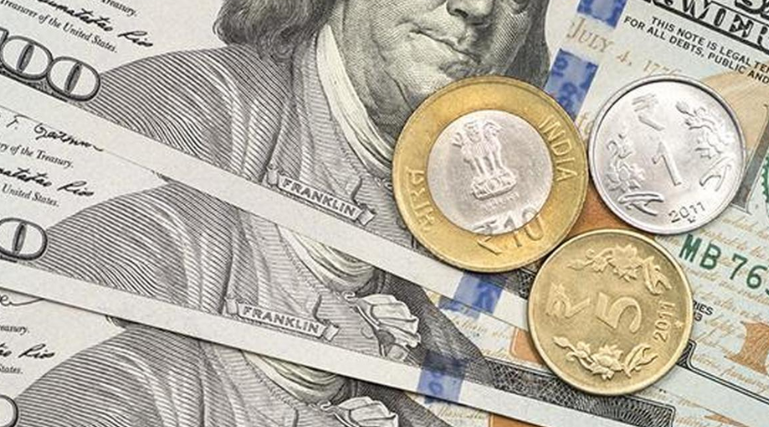
6 july 2026 Punjab Khabarnama Bureau : The Indian rupee weakened by 10 paise to trade at 95.28 against the U.S. dollar during early trading on Monday, reflecting continued pressure from a stronger American currency in global markets, rising crude oil prices, and persistent foreign institutional investor (FII) outflows.
Currency traders said that despite a positive trend in domestic equity markets, the rupee remained under pressure as demand for the U.S. dollar increased among importers and investors. Global economic uncertainties and expectations regarding the U.S. Federal Reserve’s future monetary policy also contributed to the weakness in emerging market currencies, including the rupee.
At the interbank foreign exchange market, the rupee opened on a weaker note and soon slipped to 95.28 per dollar, registering a decline of 10 paise compared to the previous closing level. Dealers noted that the local currency witnessed selling pressure during the initial hours of trading as investors preferred the safe-haven dollar.
Strong Dollar Weighs on Emerging Market Currencies
The U.S. dollar continued to remain firm against a basket of major global currencies, supported by expectations that interest rates in the United States may remain elevated for longer than previously anticipated. A stronger dollar generally puts pressure on emerging market currencies by making dollar-denominated assets more attractive for global investors.
Analysts believe that continued resilience in the U.S. economy has strengthened investor confidence in the greenback, limiting the recovery prospects for currencies such as the Indian rupee.
Rising Crude Oil Prices Add Pressure
Higher international crude oil prices have further weakened sentiment for the Indian currency. Since India imports more than 80 percent of its crude oil requirements, rising oil prices increase the country’s import bill and create additional demand for dollars.
Market participants noted that fluctuations in crude prices remain one of the biggest factors influencing the rupee’s movement. If oil prices continue to rise, the pressure on India’s current account deficit could intensify, leading to further weakness in the domestic currency.
Foreign Investor Outflows Continue
Another major factor behind the rupee’s decline is the sustained selling by foreign institutional investors in Indian equity and debt markets. FIIs have remained cautious due to global uncertainties, prompting capital outflows from emerging markets.
When foreign investors sell Indian assets, they convert rupees into U.S. dollars before moving funds overseas. This increases demand for the dollar and weakens the local currency.
However, domestic institutional investors and retail participation have helped cushion the impact on Indian equity markets, preventing excessive volatility.
Domestic Markets Offer Limited Support
Indian benchmark equity indices opened with modest gains, supported by buying in banking, information technology, and automobile stocks. Normally, stronger equity markets attract foreign investment and support the rupee.
Despite positive equity sentiment, forex traders said the influence of global factors outweighed domestic optimism, resulting in continued weakness in the currency.
Experts believe that unless there is a meaningful improvement in global risk appetite or a decline in crude oil prices, the rupee may continue to trade under pressure in the near term.
RBI Closely Monitoring Currency Movement
Market participants expect the Reserve Bank of India (RBI) to continue monitoring excessive volatility in the foreign exchange market. While the central bank generally allows the rupee to move according to market forces, it may intervene occasionally to prevent sharp fluctuations.
The RBI maintains substantial foreign exchange reserves, enabling it to stabilize the currency during periods of excessive volatility. Analysts believe the central bank will likely continue its calibrated approach without targeting any specific exchange rate.
Global Economic Developments in Focus
Investors are also awaiting key global economic indicators, including U.S. inflation data, employment reports, and statements from Federal Reserve officials. These developments are expected to provide fresh direction to the dollar and global currency markets.
Additionally, geopolitical tensions and uncertainty surrounding global trade continue to influence investor sentiment worldwide.
Outlook for the Rupee
Currency experts expect the rupee to remain range-bound with a negative bias in the short term. The movement of crude oil prices, foreign capital flows, global bond yields, and U.S. economic data will continue to determine the direction of the Indian currency.
If crude oil prices soften and foreign investment returns to Indian markets, the rupee could recover some of its recent losses. However, sustained strength in the U.S. dollar may keep the domestic currency under pressure.
For businesses involved in international trade, importers may continue to face higher costs due to the weaker rupee, while exporters could benefit from improved competitiveness in overseas markets.
Overall, the Indian rupee’s early decline reflects ongoing global financial uncertainties rather than domestic economic weakness. Market participants will closely monitor international developments and RBI actions for further cues in the coming trading sessions.