

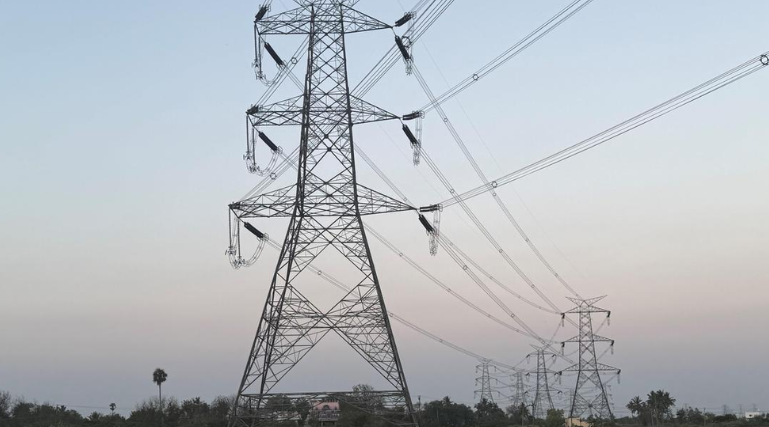
2 july 2026 Punjab Khabarnama Bureau : India’s high-voltage power conductor industry is witnessing a significant rise in demand as electricity consumption reaches record levels, prompting utilities to accelerate transmission network expansion. To capitalize on the growing opportunity, several domestic manufacturers are entering technology partnerships, expanding production capacity, and investing in advanced conductor technologies to meet the country’s evolving power infrastructure needs.
The increase in electricity demand has been driven by rapid industrialization, urbanization, expanding renewable energy capacity, and rising consumption during peak summer months. As power generation continues to grow, utilities are focusing on strengthening transmission infrastructure to ensure efficient and reliable delivery of electricity across regions.
High-voltage conductors play a critical role in electricity transmission by carrying power over long distances from generating stations to substations. With India adding new renewable energy projects and modernizing its national grid, demand for advanced conductors capable of handling higher loads with lower transmission losses has increased substantially.
Industry experts say the expansion of transmission corridors under various central and state government projects has created a strong order pipeline for conductor manufacturers. Power transmission companies are increasingly seeking high-performance conductors that offer greater current-carrying capacity, improved efficiency, and enhanced durability under diverse climatic conditions.
To meet these requirements, several Indian companies are entering technology collaborations with international firms specializing in advanced conductor materials and manufacturing processes. These partnerships are expected to improve product quality, introduce next-generation transmission technologies, and strengthen the competitiveness of domestic manufacturers in both domestic and export markets.
Manufacturers are also investing in automation, digital quality control systems, and new production lines to increase output while maintaining stringent quality standards. Industry executives believe that technology transfer agreements will help Indian firms produce specialized conductors that meet global performance and safety benchmarks.
The transition toward renewable energy is another major factor supporting conductor demand. Large-scale solar and wind power projects are often located far from consumption centres, requiring extensive transmission infrastructure to evacuate electricity efficiently. High-capacity conductors are essential for connecting these renewable energy parks to the national grid.
The government’s continued emphasis on expanding transmission networks under various infrastructure development programmes has further strengthened market prospects. New interstate transmission projects, grid modernization initiatives, and investments in smart transmission systems are expected to sustain demand over the coming years.
Apart from conventional aluminium conductors, utilities are increasingly adopting advanced conductor technologies designed to carry higher electrical loads without requiring complete replacement of existing transmission towers. Such solutions enable utilities to upgrade network capacity while reducing project costs and minimizing construction timelines.
Industry analysts note that reconductoring existing transmission lines using high-temperature, low-sag conductors has emerged as a cost-effective alternative to building entirely new transmission corridors. This approach allows utilities to improve network capacity while addressing land acquisition and environmental challenges.
The growing electrification of transportation, expansion of data centres, and increasing industrial power requirements are also contributing to higher transmission investments. As electricity demand continues to rise across sectors, utilities are expected to place additional orders for high-performance conductors capable of supporting future grid expansion.
Domestic manufacturers are optimistic that technology partnerships will enable them to diversify product portfolios and reduce dependence on imported technologies. Many companies are also exploring export opportunities as global demand for transmission infrastructure grows alongside renewable energy investments worldwide.
The conductor manufacturing sector is expected to benefit from India’s broader infrastructure development agenda, which includes expanding transmission capacity, improving grid resilience, and integrating renewable energy into the national power system. These initiatives are likely to generate sustained demand for advanced transmission equipment over the medium and long term.
Raw material prices, particularly aluminium, remain an important factor influencing production costs and profitability. Manufacturers are closely monitoring commodity price movements while implementing efficiency measures to maintain competitive pricing without compromising quality.