

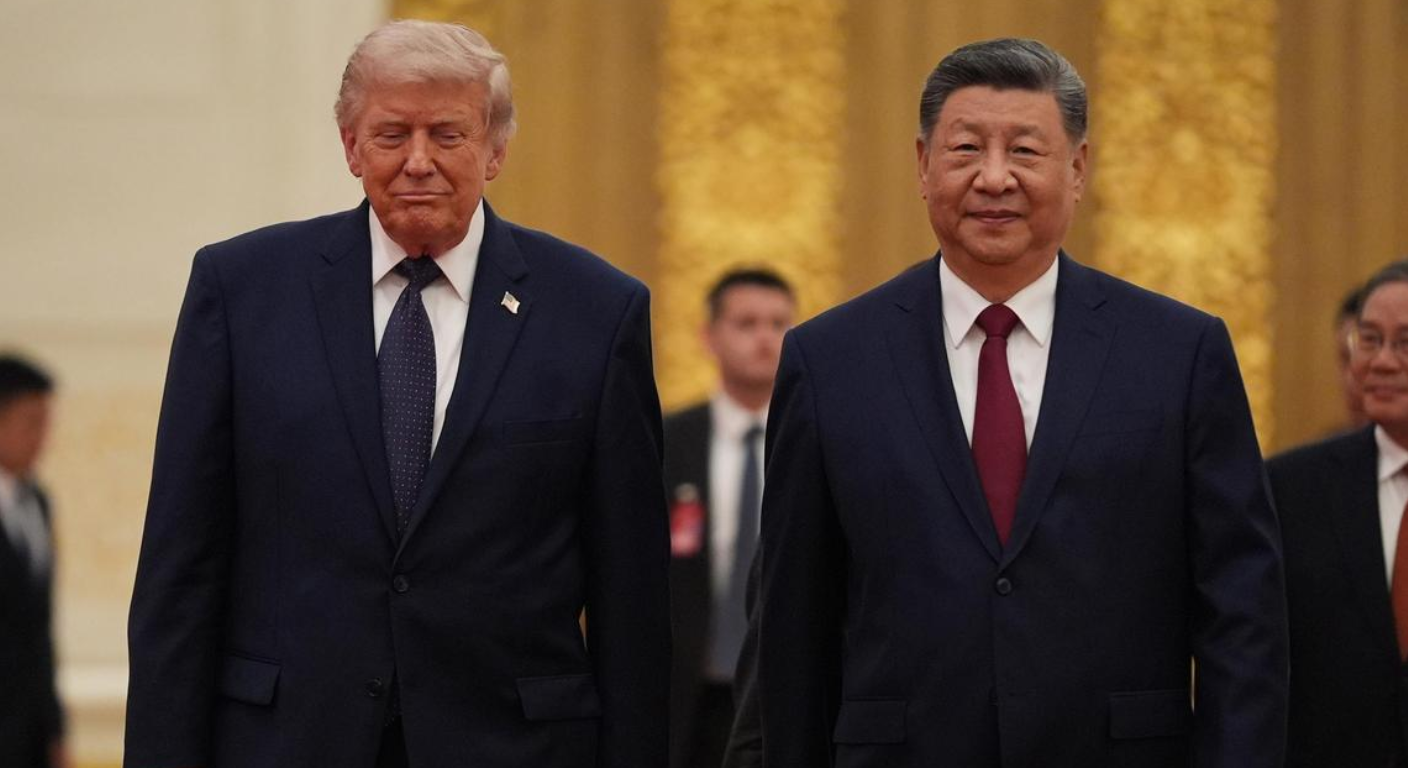
14 May 2026 Punjab Khabarnama Bureau : The White House described the recent meeting between Donald Trump and Xi Jinping as “good,” signaling a potentially constructive phase in relations between the world’s two largest economies despite continuing strategic tensions and trade-related disputes.
According to officials, the meeting involved discussions on a range of major geopolitical and economic issues affecting bilateral ties between the United States and China. While detailed outcomes were not immediately disclosed, the positive assessment from the White House suggested that both sides engaged in meaningful dialogue during the interaction.
The talks reportedly covered topics including:
- Trade relations
- Economic cooperation
- Global security concerns
- Technology competition
- Regional geopolitical stability
Relations between the United States and China have remained complex in recent years due to disagreements involving tariffs, supply chains, technology restrictions, military influence, and strategic competition in the Indo-Pacific region.
Despite these tensions, both Washington and Beijing have periodically emphasized the importance of maintaining communication channels to avoid escalation and manage differences responsibly.
The White House’s characterization of the meeting as “good” was viewed by analysts as an effort to project stability and diplomatic engagement at a time of heightened global uncertainty.
Financial markets and international observers closely monitor high-level U.S.-China interactions because the relationship significantly influences:
- Global trade flows
- Energy markets
- Technology industries
- Manufacturing supply chains
- International financial stability
Analysts believe any improvement in dialogue between the two powers could positively affect investor sentiment and reduce concerns regarding further economic confrontation.
Donald Trump and Xi Jinping have shared a highly scrutinized diplomatic relationship over the years, particularly during periods marked by trade disputes and tariff negotiations.
Trade tensions between the two countries previously resulted in:
- Tariff increases
- Supply chain disruptions
- Market volatility
- Technology restrictions
- Global economic uncertainty
Even so, both nations remain deeply interconnected economically despite strategic rivalry.
Experts say continued dialogue is especially important given current global challenges involving:
- Economic slowdown concerns
- Geopolitical conflicts
- Energy market uncertainty
- Technological competition
- International security issues
Diplomatic engagement between major global powers is often viewed as essential for maintaining broader international stability.
Chinese officials have also repeatedly emphasized the need for cooperation and stable communication with the United States, particularly on economic and global governance issues.
Political analysts caution, however, that a positive meeting description does not necessarily indicate immediate breakthroughs on major disagreements. Key disputes involving trade policy, semiconductor technology, Taiwan, and military influence remain unresolved.
The meeting nevertheless reflects ongoing efforts by both sides to maintain diplomatic interaction despite deep strategic competition.
Global investors and policymakers are expected to closely monitor future developments and any official announcements emerging from continued U.S.-China engagement.
The White House statement may also help ease immediate market concerns regarding escalating tensions between the two countries, especially amid ongoing volatility in global economic conditions.
As the United States and China continue balancing competition with cooperation, diplomatic meetings between senior leaders are likely to remain central to managing one of the world’s most important bilateral relationships.