

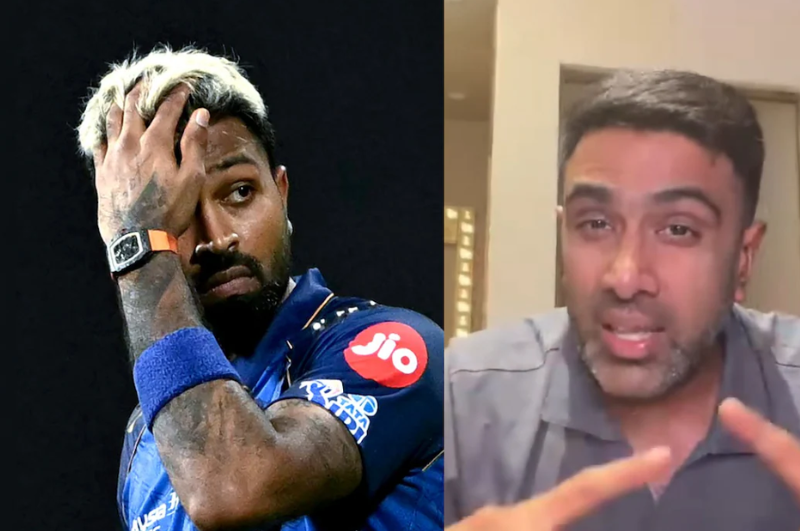
24 April 2026 Punjab Khabarnama Bureau : A key moment in the high-voltage Indian Premier League 2026 clash between Mumbai Indians (MI) and Chennai Super Kings (CSK) has sparked debate, with veteran spinner Ravichandran Ashwin openly criticising a crucial decision made by MI captain Hardik Pandya that may have cost his team the match.
The game, which was closely contested, turned on a tactical error that allowed CSK to regain momentum at a critical stage. While Mumbai Indians were in a strong position at one point, the tide shifted dramatically following what Ashwin described as a “game-changing blunder.”
Ashwin, known for his analytical insights into the game, pointed out that decision-making under pressure is often what separates winning teams from losing ones. Without holding back, he suggested that MI’s choices in key overs lacked clarity and tactical awareness.
The specific moment under scrutiny involved field placement and bowling strategy during the death overs. According to Ashwin, a more defensive setup or a change in bowling option could have prevented CSK from capitalising and accelerating towards a match-winning total.
Hardik Pandya, who has been under the spotlight for his leadership this season, faced criticism for not adapting quickly enough to the evolving match situation. Critics argue that in T20 cricket, especially in high-pressure games, captains must be proactive and anticipate opposition strategies.
The match saw CSK take advantage of the lapse, with their batters shifting gears at the right moment. Once momentum swung in their favour, MI struggled to regain control, ultimately falling short in the contest.
Ashwin’s comments reflect a broader discussion about leadership and decision-making in the IPL. As a tournament known for its intensity and unpredictability, even minor errors can have significant consequences.
Fans and analysts have been divided in their reactions. While some agree with Ashwin’s assessment, others believe that such decisions are easier to critique in hindsight. T20 matches often involve split-second judgments, and outcomes can hinge on execution as much as strategy.
For Hardik Pandya, the criticism adds to the pressure of leading a high-profile franchise like Mumbai Indians. The team has experienced an inconsistent season, and each loss has amplified scrutiny of both individual performances and tactical decisions.
Despite the setback, MI still has opportunities to bounce back in the tournament. However, improving decision-making in crunch situations will be crucial if they aim to stay competitive.
CSK, on the other hand, once again demonstrated their ability to capitalise on opposition mistakes. Known for their calm approach and experience, they managed to turn the game around and secure an important victory.
Ashwin’s remarks also highlight the importance of game awareness and adaptability in modern T20 cricket. With teams becoming increasingly data-driven, captains are expected to make informed decisions based on match-ups, conditions, and player form.
The incident serves as a reminder of how fine the margins are in the IPL. A single over, a missed opportunity, or a tactical misstep can determine the outcome of a match.
As the tournament progresses, both teams will look to learn from the encounter. For MI, addressing tactical gaps will be a priority, while CSK will aim to maintain their winning momentum.
In conclusion, Ravichandran Ashwin’s critique of Hardik Pandya’s decision underscores the significance of leadership in T20 cricket. With the IPL 2026 season heating up, such moments are likely to continue shaping the narrative of the competition.
Summary
R Ashwin criticised Hardik Pandya’s key tactical error in MI’s loss to CSK, saying the blunder shifted momentum, highlighting growing pressure on Pandya’s captaincy in IPL 2026.