

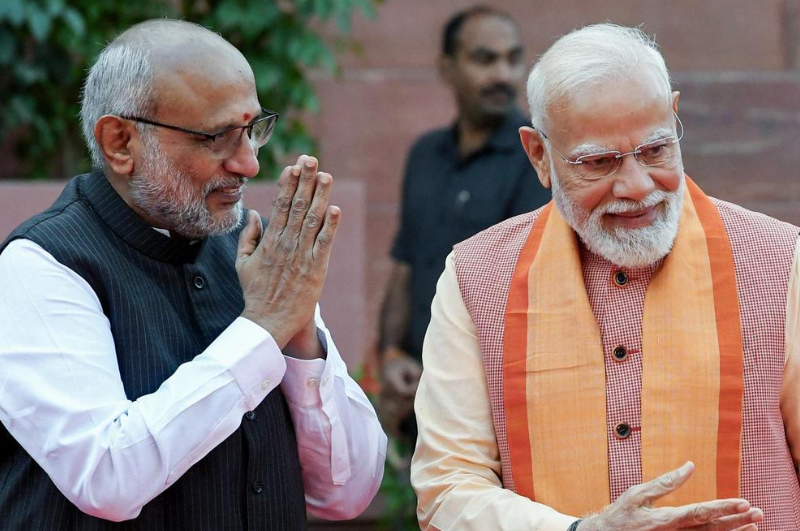
21 April 2026 Punjab Khabarnama Bureau : India marked Civil Services Day with messages of appreciation and encouragement from the country’s top leadership, as Jagdeep Dhankhar and Narendra Modi extended their greetings to civil servants across the nation.
Observed annually on April 21, Civil Services Day recognises the invaluable contribution of India’s civil servants in governance, policy implementation, and public service delivery. The day serves as an occasion to reflect on their role in nation-building and to reaffirm commitment to public welfare.
In his message, Vice-President Jagdeep Dhankhar highlighted the critical role civil servants play in ensuring the smooth functioning of the administrative machinery. He emphasised the need for integrity, transparency, and accountability in public service, noting that civil servants are the backbone of effective governance.
Prime Minister Narendra Modi also lauded the dedication and hard work of civil servants, acknowledging their efforts in implementing government policies and delivering services to citizens, especially in challenging circumstances. He urged them to continue working with a spirit of service and innovation to meet the evolving needs of the country.
Civil Services Day holds historical significance, commemorating the address delivered by Sardar Vallabhbhai Patel to the first batch of Indian Administrative Service (IAS) officers in 1947. In his speech, Patel referred to civil servants as the “steel frame” of India, underscoring their importance in maintaining unity and stability.
The day is also marked by the presentation of the Prime Minister’s Awards for Excellence in Public Administration, which recognise outstanding work by civil servants and administrative units. These awards aim to encourage innovation, efficiency, and citizen-centric governance.
Across the country, various events and programmes are organised to celebrate the occasion. Workshops, seminars, and discussions are held to address contemporary challenges in public administration and to share best practices among officials.
Civil servants in India operate at multiple levels, from central ministries to state and district administrations. Their responsibilities include policy formulation, implementation of development programmes, maintenance of law and order, and delivery of essential services such as healthcare, education, and infrastructure.
In recent years, the role of civil servants has evolved significantly, with increasing emphasis on technology-driven governance and data-based decision-making. Initiatives such as digital services, e-governance platforms, and direct benefit transfers have transformed the way public services are delivered.
The COVID-19 pandemic further highlighted the importance of civil servants, who played a key role in managing the crisis, coordinating relief efforts, and ensuring continuity of essential services. Their work during emergencies underscores the need for resilience and adaptability in public administration.
However, the profession also comes with challenges, including high workloads, complex policy environments, and the need to balance diverse stakeholder interests. Ensuring ethical conduct and maintaining public trust remain critical aspects of their role.
Experts believe that continuous training and capacity-building are essential to equip civil servants with the skills needed to address emerging issues. Strengthening institutional frameworks and promoting a culture of innovation can further enhance their effectiveness.
The messages from the Vice-President and the Prime Minister serve as a reminder of the importance of public service and the expectations placed on civil servants. Their recognition not only boosts morale but also reinforces the values of dedication and accountability.
As India continues its journey toward development and growth, the role of civil servants will remain central to achieving national goals. Their ability to adapt to changing circumstances and deliver results will be key to the country’s progress.
In conclusion, Civil Services Day provides an opportunity to acknowledge the contributions of civil servants and to reflect on their role in shaping the nation’s future. The greetings from the country’s leadership underscore the significance of their work and the need for continued commitment to public service.
Summary
Vice-President Jagdeep Dhankhar and Prime Minister Narendra Modi greeted civil servants on Civil Services Day, praising their role in governance, nation-building, and public service while urging continued dedication and innovation.