

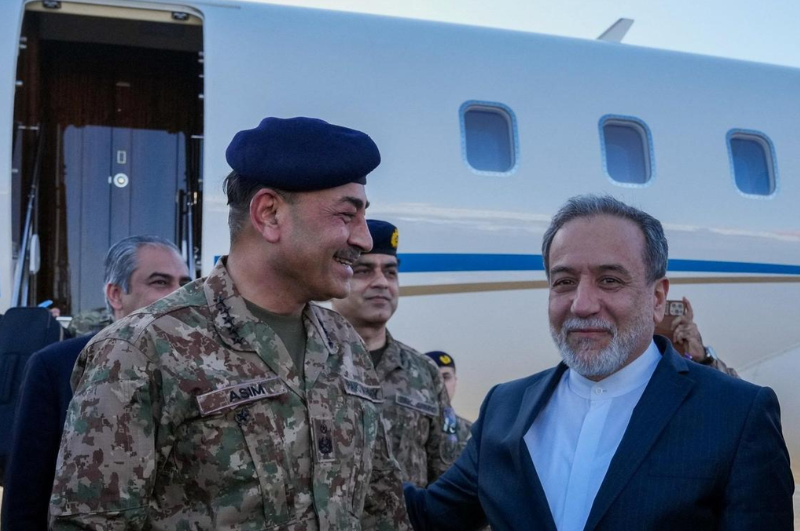
16 April 2026 Punjab Khabarnama Bureau : A high-level Pakistani delegation led by Army Chief Asim Munir has arrived in Tehran as part of renewed diplomatic efforts to revive stalled peace talks between the United States and Iran.
The visit comes at a critical juncture, just days after initial negotiations in Islamabad failed to produce a breakthrough in ending the ongoing conflict. Pakistan, which hosted those talks, has now stepped up its role as a mediator, attempting to bridge differences between the two sides and prevent further escalation.
According to reports, Munir’s delegation is carrying messages between Washington and Tehran, with the aim of laying the groundwork for a second round of negotiations. The discussions are expected to focus on key sticking points, including Iran’s nuclear programme, sanctions relief, and broader regional security concerns.
Pakistan’s involvement reflects its strategic positioning and diplomatic outreach in the region. With ties to both the United States and Iran, Islamabad has emerged as a crucial intermediary, facilitating communication at a time when direct engagement between the two adversaries remains limited.
The delegation was received by senior Iranian officials, including the foreign minister, signalling Tehran’s willingness to continue diplomatic engagement despite recent tensions. Pakistani officials have expressed cautious optimism that the visit could help revive dialogue and possibly lead to a breakthrough.
Recent developments suggest that while progress has been made in narrowing differences, significant disagreements remain. These include the extent of Iran’s nuclear activities and the duration of any potential restrictions, which have long been contentious issues in negotiations.
The urgency of the talks is underscored by the fragile ceasefire currently in place. With the truce nearing its expiration, both sides face pressure to reach at least a temporary understanding to avoid a renewed escalation of hostilities. Pakistan’s mediation efforts are seen as critical in maintaining this delicate balance.
Munir’s visit is also being viewed as a “last-ditch” diplomatic effort to salvage the peace process after the failure of the Islamabad talks. The earlier round of discussions, which lasted over 20 hours, ended without agreement, highlighting the deep mistrust and complexity of the issues involved.
Despite these challenges, there are signs of cautious optimism. Pakistani officials have indicated that a “major breakthrough” could still be possible if both sides show flexibility and willingness to compromise. The delegation’s role in relaying messages and building consensus is seen as a key step in that direction.
The broader geopolitical context adds to the significance of the visit. The conflict has already impacted global energy markets, particularly due to tensions in the Strait of Hormuz, a vital route for oil shipments. Any progress in negotiations could help stabilise the region and reduce economic uncertainty worldwide.
At the same time, the situation remains highly volatile. Military posturing, economic sanctions, and regional alliances continue to shape the dynamics of the conflict, making diplomacy both essential and challenging.
Pakistan’s proactive role has been widely noted by international observers. By hosting talks and engaging directly with both parties, it has positioned itself as a key player in efforts to de-escalate the crisis and promote regional stability.
As the talks in Tehran unfold, attention will be on whether the delegation can succeed in breaking the deadlock and paving the way for meaningful negotiations. The outcome could have far-reaching implications not only for the United States and Iran but also for the broader Middle East and global security landscape.
In conclusion, the arrival of the Pakistani delegation in Iran marks a significant step in ongoing diplomatic efforts to resolve the conflict. While challenges remain, the renewed push for dialogue offers a glimmer of hope for a peaceful resolution in an increasingly tense region.
Summary
A Pakistani delegation led by Asim Munir reached Tehran to revive US-Iran peace talks after failed Islamabad negotiations, aiming to extend the ceasefire and reduce escalating regional tensions.