

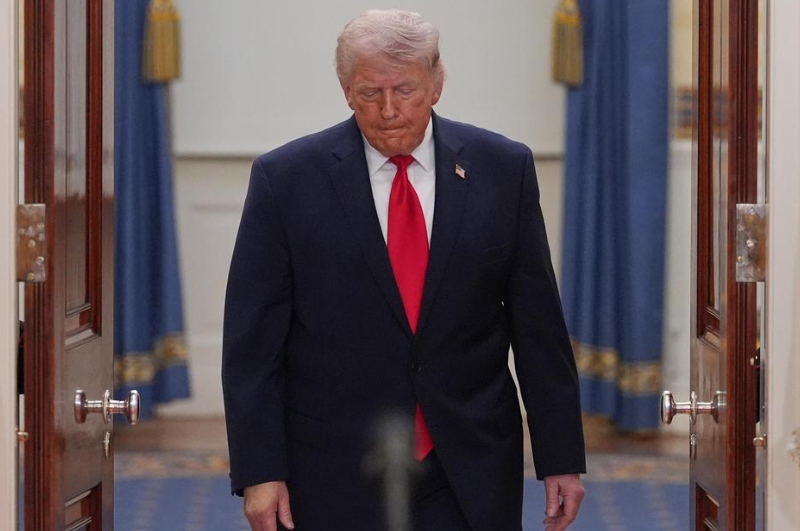
2 April 2026 Punjab Khabarnama Bureau : U.S. President Donald Trump delivered a high-stakes national address on the ongoing Iran-Israel war, outlining his administration’s position, progress in the conflict, and the possible timeline for its conclusion. The speech comes at a crucial moment as global attention remains fixed on escalating tensions in the Middle East and their wider geopolitical and economic implications.
In his address, Trump projected confidence about the direction of the war, asserting that U.S. military operations have achieved significant success in a relatively short period. He emphasized that American forces have carried out targeted strikes aimed at weakening Iran’s strategic capabilities, including its military infrastructure and missile systems. According to Trump, these actions have substantially reduced Iran’s ability to pose a threat in the region.
A key highlight of the speech was Trump’s claim that the conflict could end within a matter of weeks. He suggested that the United States is close to achieving its core objectives and indicated that a withdrawal of forces may follow soon after. This timeline, while optimistic, reflects the administration’s attempt to present the war as a controlled and limited engagement rather than a prolonged conflict.
Trump also addressed the rationale behind the military campaign, reiterating long-standing concerns about Iran’s nuclear ambitions. He framed the operation as a necessary step to prevent Iran from acquiring nuclear weapons, a goal that has been central to U.S. policy in the region. By linking the conflict to global security concerns, Trump sought to justify the actions taken by his administration.
Despite the confident tone, the speech included warnings directed at Iran. Trump made it clear that the United States remains prepared to intensify military action if required. He stated that additional targets, including critical infrastructure, could be considered if Iran continues to resist or escalate hostilities. This dual message of progress and caution underscores the uncertain nature of the situation.
The address also touched upon the broader impact of the conflict, particularly on global energy markets. The Middle East plays a crucial role in oil supply, and any disruption in the region has immediate consequences for prices and availability. Trump acknowledged these concerns and suggested that alternative arrangements could be explored to stabilize supply if needed.
International reactions to the speech have been mixed. While some observers view the announcement of a potential end to the conflict as a positive development, others remain skeptical about the feasibility of such a timeline. Analysts point out that conflicts of this scale often involve multiple stakeholders and complex dynamics, making quick resolutions challenging.
The speech has also drawn attention domestically within the United States. Supporters of the administration have welcomed Trump’s assertive stance and his emphasis on achieving clear objectives. Critics, however, have questioned the lack of a detailed exit strategy and the potential long-term consequences of the conflict.
In the Middle East, the situation remains tense despite the claims of progress. Iran has not indicated any willingness to concede, and regional actors continue to monitor developments closely. The possibility of further escalation cannot be ruled out, particularly if military actions intensify or new fronts emerge.
Trump’s address reflects a broader effort to shape public perception of the war. By emphasizing achievements and outlining a potential endgame, the administration aims to maintain support both at home and abroad. At the same time, the speech acknowledges the complexities of the conflict, even as it presents an optimistic outlook.
Experts note that the coming weeks will be critical in determining whether the projected timeline holds true. Diplomatic efforts, military developments, and regional responses will all play a role in shaping the outcome. The interplay between these factors will ultimately decide whether the conflict moves toward resolution or continues to escalate.
The address also highlights the evolving nature of modern warfare, where military actions are closely intertwined with political messaging and global communication. Leaders must not only manage operations on the ground but also navigate public opinion and international relations.
As the situation continues to unfold, the world will be watching closely for further developments. Trump’s speech has set expectations for a possible conclusion to the conflict, but the reality on the ground will determine whether those expectations are met.
In conclusion, the address by Donald Trump on the Iran-Israel war presents a narrative of progress and optimism, coupled with caution and strategic warning. While the possibility of the war ending within weeks offers hope, significant uncertainties remain, making the coming period crucial for all parties involved.
Summary
Donald Trump claimed progress in the Iran war, suggested it may end within weeks, and warned of further action, highlighting both optimism and uncertainty amid ongoing geopolitical tensions.