

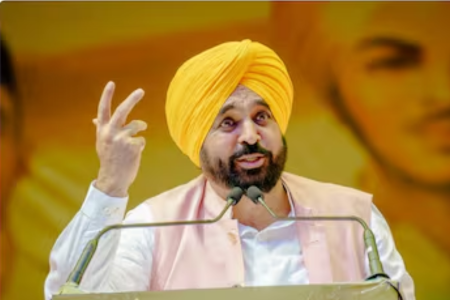
24 March 2026 Punjab Khabarnama Bureau : Bhagwant Mann has stirred a fresh political debate with his recent remarks, stating that “after independence, some selfish people occupied the corridors of power.” The statement has drawn attention across political circles, with supporters backing his comments and opposition parties criticizing them.
Mann’s Statement
Speaking at a public event, Bhagwant Mann reflected on India’s journey since Indian Independence, suggesting that the promise of freedom was not fully realized due to the actions of certain individuals who, according to him, prioritized personal gains over public welfare.
He emphasized that the sacrifices made during the independence movement were meant to establish a system that serves the people, but alleged that this vision was compromised over time.
Political Context
Mann’s remarks come at a time when political narratives around governance, accountability, and historical legacy are gaining prominence. His statement appears to be aimed at highlighting perceived shortcomings in past administrations while positioning his government as one focused on public service.
Observers note that such comments often resonate with voters who feel disillusioned with traditional political systems.
Opposition Reaction
Opposition parties were quick to respond, criticizing Mann’s remarks as overly general and politically motivated. Leaders from rival parties argued that such statements undermine the contributions of past governments and leaders who played a role in nation-building.
They also called on the Chief Minister to focus on current governance challenges rather than revisiting historical grievances.
Support from Allies
Supporters of Bhagwant Mann have defended his statement, interpreting it as a call for accountability and transparency in governance. They argue that acknowledging past mistakes is essential for building a better future.
According to them, the comment reflects a broader sentiment among citizens who seek cleaner and more efficient administration.
Broader Debate on Governance
The statement has reignited discussions about governance in post-independence India. Analysts suggest that while the country has made significant progress in various sectors, challenges such as corruption, inequality, and inefficiency have persisted.
Mann’s remarks tap into these concerns, bringing attention to the need for continuous reforms.
Historical Sensitivities
Comments related to the post-independence period often carry significant emotional and political weight. The era is associated with both achievements and challenges, making it a sensitive topic in public discourse.
Experts caution that while critical reflection is important, it should be balanced with recognition of the progress made over decades.
Public Reaction
Public response to the statement has been mixed. Some citizens have expressed agreement, citing instances of corruption and governance failures. Others have criticized the remark as too broad, arguing that it overlooks the efforts of many leaders who contributed positively to the country’s development.
Social media platforms have seen active discussions, with users sharing diverse perspectives on the issue.
Implications for State Politics
In Punjab, the statement could influence political narratives in the coming months. It reinforces Mann’s image as a leader willing to challenge established norms, but also exposes him to criticism from opponents.
How this debate evolves may have implications for the state’s political dynamics and public perception of the government.
Conclusion
Bhagwant Mann’s remark about “selfish people” occupying power corridors after independence has sparked a wide-ranging debate on governance, history, and accountability. While opinions remain divided, the statement has succeeded in bringing these issues back into public focus.
Summary
Punjab CM Bhagwant Mann said selfish individuals occupied power after independence, sparking political debate. Supporters back his accountability stance, while opposition criticizes the remarks as generalizing past leadership contributions.