

24 March 2026 Punjab Khabarnama Bureau : Tensions in the Middle East have sharply escalated as coordinated military actions involving Israel and the United States targeted key sites in Iran, while Iran retaliated with missile strikes, including a direct hit in Tel Aviv.
The situation marks one of the most intense phases in the ongoing conflict, raising fears of a broader regional war and disruptions to global energy markets.
Strikes on Iranian Targets
Israeli forces launched extensive airstrikes across Iran, focusing primarily on military and strategic infrastructure. Targets reportedly included missile production facilities, intelligence centers, and bases linked to Iran’s Revolutionary Guard.
While earlier phases of the conflict included attacks on energy infrastructure, recent developments suggest a temporary shift. The United States has reportedly paused direct strikes on Iran’s energy sector for a short period, though military targets remain under active consideration.
This adjustment appears to be part of a broader attempt to manage escalation risks, particularly given the global importance of energy supplies originating from the region.
Energy Infrastructure Under Threat
Energy facilities have been a central focus of the conflict. Earlier strikes and threats targeting oil and gas installations have heightened concerns about supply disruptions, especially through critical routes like the Strait of Hormuz.
Analysts warn that any sustained damage to Iran’s energy infrastructure could have ripple effects on global oil prices, trade routes, and economic stability. Even limited strikes have already injected volatility into energy markets.
Iran’s Retaliation
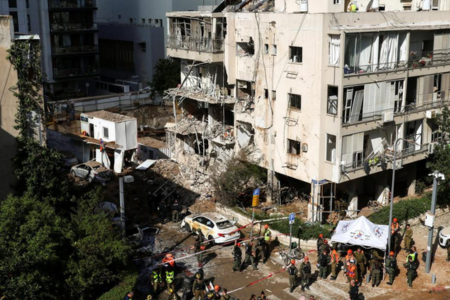
In response, Iran launched multiple waves of missiles toward Israel. Several projectiles struck central regions, including Tel Aviv, where buildings were damaged and civilians injured.
Reports indicate that some missiles penetrated air defense systems, causing direct impacts in residential areas. Emergency services were deployed, and authorities urged residents to remain in shelters as sirens sounded across major cities.
Additional missile barrages targeted other parts of Israel, including northern and southern regions, with some intercepted mid-air while others caused localized damage.
Rising Civilian Impact
The escalating exchanges have resulted in increasing civilian casualties and infrastructure damage on both sides. In Israel, residential areas have been affected by missile strikes, while in Iran, widespread air raids have caused destruction across multiple cities.
The humanitarian situation is becoming a growing concern, with reports of injuries, displacement, and damage to essential services.
Diplomatic Signals and Denials
Amid the military escalation, there have been conflicting signals regarding diplomatic efforts. U.S. officials have suggested that discussions with Iranian counterparts may be underway, leading to a temporary pause in certain types of strikes.
However, Iranian authorities have denied the existence of any such negotiations, calling the claims misleading.
This divergence highlights the uncertainty surrounding diplomatic channels and the difficulty of achieving de-escalation.
Regional and Global Implications
The conflict has broader implications beyond the immediate region. The Middle East is a critical hub for global energy supplies, and instability can quickly translate into higher oil prices and economic uncertainty worldwide.
Shipping routes, particularly through the Strait of Hormuz, are under increased scrutiny. Any disruption could significantly impact global trade and energy security.
Additionally, the involvement of multiple actors raises the risk of the conflict expanding further, potentially drawing in other regional or international players.
Military Strategy and Escalation Risks
Both sides appear to be calibrating their responses carefully. Israel continues to target strategic military assets in Iran, aiming to weaken its operational capabilities. Iran, meanwhile, is demonstrating its ability to strike Israeli cities directly, signaling deterrence.
The interplay of offense and retaliation suggests a cycle of escalation that could intensify if not contained.
What Lies Ahead
The coming days are likely to be critical in determining the trajectory of the conflict. Continued missile exchanges, combined with airstrikes, could push the situation toward a more prolonged and widespread confrontation.
At the same time, any breakthrough in diplomatic efforts—if they materialize—could help ease tensions and prevent further escalation.
Conclusion
The latest developments underscore the fragile and volatile nature of the Middle East security landscape. With Israel and the United States striking targets in Iran, and Iran responding with missile attacks on Tel Aviv, the conflict has entered a dangerous phase.
As military actions continue and diplomatic efforts remain uncertain, the risk of further escalation looms large, with significant consequences for regional stability and global markets.
Summary
Israel and the U.S. struck Iranian targets, while Iran retaliated with missile attacks hitting Tel Aviv. Escalation raises fears of wider war, civilian harm, and global energy disruption.