

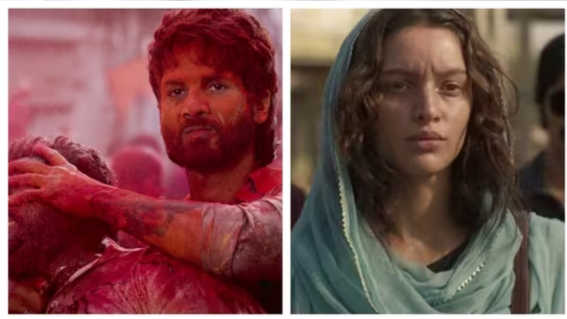
13 February 2026 Punjab Khabarnama Bureau : O Romeo 1st arrives with considerable anticipation—and largely lives up to it—powered by a towering performance from Shahid Kapoor and a revelatory turn by Triptii Dimri. A moody, contemporary reimagining of star-crossed love, the film blends romance, rage, and moral ambiguity into a gripping cinematic experience that lingers well after the credits roll.
At the heart of the film is Shahid Kapoor’s Romeo—a volatile, fiercely intelligent man battling inner demons while navigating love in a fractured world. Shahid commits fully to the role, delivering a performance that is raw, restless, and deeply internalized. From moments of quiet vulnerability to explosive emotional outbursts, he commands the screen with a confidence that feels earned rather than showy. It’s a portrayal many critics are already calling his best yet, and with good reason: the actor finds nuance in extremes, never letting intensity tip into excess.
Opposite him, Triptii Dimri is nothing short of outstanding. Her Juliet is written with complexity—tender yet unyielding, innocent yet fiercely self-aware—and Triptii plays every shade with remarkable control. She brings ferocity when the narrative demands defiance and softness when silence speaks louder than words. In several pivotal scenes, she matches Shahid beat for beat, ensuring the romance feels like a meeting of equals rather than a one-sided orbit.
Director’s choices lean into atmosphere: dimly lit interiors, rain-soaked streets, and a color palette that mirrors the film’s emotional temperature. The pacing is deliberate, sometimes demanding patience, but this restraint allows the performances to breathe. The film isn’t interested in rushing its emotions; it lets longing, anger, and doubt simmer until they boil over.
The screenplay is sharp, peppered with lines that feel lived-in rather than lyrical for lyricism’s sake. While the title evokes Shakespeare, the film avoids grand speeches, opting instead for intimate confrontations and morally fraught decisions. This modern lens keeps the story grounded and relevant, especially as it explores themes of consent, agency, and the cost of obsession.
Music and background score elevate key moments without overpowering them. The songs are sparse but effective, serving the narrative rather than interrupting it. One standout montage—set against a haunting melody—captures the push-and-pull of the central relationship with aching clarity.
Where O Romeo 1st stumbles slightly is in its second act, which occasionally leans too heavily on repetition to underscore conflict. A subplot involving societal pressure feels underdeveloped, and a few transitions could have benefited from tighter editing. However, these are minor blemishes in an otherwise confident film.
What truly sets the film apart is its refusal to romanticize toxicity. Love here is passionate, yes—but also demanding and dangerous when left unchecked. The film asks uncomfortable questions and doesn’t always offer easy answers, trusting the audience to sit with ambiguity.
In the final stretch, the film delivers emotionally and thematically. The climax resists melodrama, choosing restraint over spectacle—a decision that pays off. By the end, what remains is not just the memory of a love story, but the imprint of two performances that elevate the material.
Verdict: O Romeo 1st is an intense, performance-driven romantic drama that marks a high point in Shahid Kapoor’s career and firmly establishes Triptii Dimri as a force to watch. It’s not flawless, but it’s fearless—and that makes it compelling.
Summary
O Romeo 1st earns praise for Shahid Kapoor’s career-best performance and Triptii Dimri’s powerful balance of ferocity and innocence, delivering a dark, intense romance driven by strong performances.