

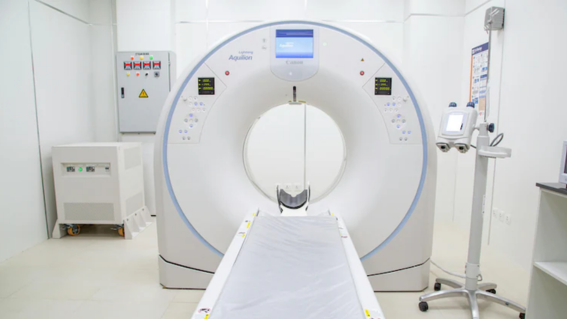
11 February 2026 Punjab Khabarnama Bureau : In a major breakthrough for medical technology and healthcare, scientists have developed an advanced artificial intelligence (AI) model capable of diagnosing brain MRI scans within seconds with an accuracy of 97.5%. The development is being hailed as a significant step forward in the early detection and treatment of neurological disorders, potentially transforming how brain diseases are diagnosed worldwide.
A Game-Changer in Medical Imaging
Brain MRI scans are among the most complex diagnostic tools in modern medicine. Interpreting them requires highly trained radiologists and neurologists, and even then, analysis can take hours or days depending on the complexity of the case. The newly developed AI model drastically reduces this time, delivering highly accurate results almost instantly.
Researchers involved in the project say the system was trained using tens of thousands of annotated brain MRI images, covering a wide range of neurological conditions, including brain tumours, strokes, neurodegenerative diseases, and structural abnormalities.
“The goal was not to replace doctors but to empower them,” said one of the lead researchers. “This AI tool acts as a highly reliable second opinion, improving diagnostic speed and accuracy.”
How the AI Model Works
The AI system uses deep learning and neural network architectures, similar to how the human brain processes visual information. By analysing patterns, textures, and anomalies in MRI scans, the model can identify subtle signs of disease that may be difficult to detect with the naked eye.
Once an MRI image is uploaded, the AI processes it in seconds, flagging potential abnormalities and providing a probability-based diagnosis. The system also highlights affected regions in the brain, helping doctors quickly focus on areas of concern.
Researchers emphasised that the model was rigorously tested across diverse datasets to ensure reliability across age groups, genders, and imaging equipment.
Accuracy That Rivals Experts
One of the most striking aspects of the study is the 97.5% diagnostic accuracy, which rivals — and in some cases exceeds — that of experienced radiologists. In controlled testing environments, the AI demonstrated exceptional consistency, reducing the risk of human error caused by fatigue or time constraints.
Medical experts say this level of precision could be life-changing, especially in emergency situations such as strokes, where every minute counts. Faster diagnosis can lead to quicker treatment decisions, significantly improving patient outcomes.
Potential Impact on Healthcare Systems
The introduction of such AI-powered diagnostic tools could have far-reaching implications for global healthcare systems:
- Reduced workload for radiologists, allowing them to focus on complex cases
- Faster diagnosis in emergency and critical care settings
- Improved access to specialist-level diagnostics in rural and underserved regions
- Lower healthcare costs through efficiency and early detection
In countries facing shortages of trained radiologists, this technology could bridge a critical gap, ensuring timely and accurate diagnoses even in resource-limited settings.
Supporting, Not Replacing, Doctors
Despite its high accuracy, researchers and medical professionals stress that AI is meant to assist, not replace, human expertise. Final diagnoses and treatment decisions will continue to rest with qualified medical professionals.
“AI can analyse images incredibly fast, but it doesn’t understand the patient’s full clinical history, symptoms, or context,” a senior neurologist explained. “The best outcomes come from combining AI precision with human judgment.”
Ethical and Regulatory Considerations
As with any AI-based medical technology, ethical and regulatory approvals are crucial. Researchers are working closely with health authorities to ensure compliance with medical safety standards, patient data privacy laws, and transparency requirements.
Before widespread clinical adoption, the AI model will undergo additional real-world trials in hospitals to evaluate its performance in routine clinical workflows.
Future Applications
Scientists believe this technology could soon be expanded beyond brain MRIs to include:
- CT scans and X-rays
- Detection of Alzheimer’s and Parkinson’s at early stages
- Monitoring disease progression over time
- Personalised treatment planning
With continuous learning, the AI model is expected to become even more accurate as it processes more data.
A Step Toward AI-Driven Medicine
The success of this AI model marks a broader shift toward AI-driven precision medicine, where technology enhances diagnostic capabilities and personalises patient care. Experts believe that such tools will soon become standard in hospitals, much like digital imaging systems are today.
Conclusion
The development of an AI model that can diagnose brain MRI scans in seconds with 97.5% accuracy represents a major milestone in medical science. By combining speed, precision, and scalability, this innovation has the potential to save lives, reduce healthcare burdens, and redefine how neurological diseases are diagnosed and treated.
Summary
Scientists have developed an AI model that diagnoses brain MRI scans in seconds with 97.5% accuracy, promising faster detection of neurological disorders and major improvements in healthcare efficiency.