

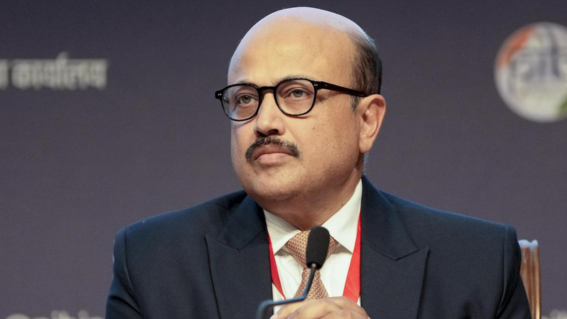
11 February 2026 Punjab Khabarnama Bureau : The Government of India has ensured that all key sensitive sectors remain fully protected under the proposed India-U.S. Interim Trade Pact, Commerce Secretary confirmed, seeking to address concerns from farmers, small businesses, and domestic industry. The assurance comes amid growing public and industry interest in the contours of the interim agreement, which is seen as a stepping stone toward a comprehensive Bilateral Trade Agreement (BTA) between the two countries.
Government’s Assurance on Sensitive Sectors
Speaking on the negotiations, the Commerce Secretary said India entered the talks with clearly defined red lines. “There is no dilution of India’s interests. All sensitive sectors have been protected,” the official stated. Sectors such as agriculture, dairy, MSMEs, public procurement, and food security-related areas have been kept outside the scope of any market-opening commitments that could adversely affect domestic stakeholders.
The government emphasised that India’s large population dependent on agriculture and small enterprises required a cautious approach, and this principle guided negotiations with the United States.
Nature of the Interim Trade Pact
The interim trade pact is designed to resolve specific trade irritants and deliver early outcomes while discussions on a full-scale BTA continue. Unlike comprehensive free trade agreements, the interim pact focuses on limited tariff rationalisation, trade facilitation, and regulatory cooperation, without forcing structural changes in sensitive areas.
Officials clarified that the agreement does not mandate sweeping tariff reductions or changes in domestic regulations that could undermine local industries. Instead, it seeks mutually acceptable solutions in areas where progress is achievable in the short term.
Why Protection of Sensitive Sectors Matters
India has historically taken a guarded stance on opening sensitive sectors, especially agriculture and dairy, due to concerns over livelihoods, income security, and rural employment. With millions dependent on these sectors, unrestricted market access to foreign players could lead to economic distress.
MSMEs, another protected segment, are considered the backbone of the Indian economy, contributing significantly to employment and exports. The Commerce Secretary reiterated that the interim pact preserves policy space for India to continue supporting these enterprises through domestic measures.
Addressing Public and Political Concerns
The announcement comes amid questions from opposition parties and industry groups about whether the interim pact could compromise India’s negotiating position or open the door to pressure in future talks. The Commerce Secretary dismissed these concerns, stating that the government remains firmly in control of the process.
“This is not an agreement that binds India into long-term obligations. It is a balanced, carefully structured arrangement,” the official said, adding that Parliament and stakeholders would be kept informed as negotiations progress.
Strategic Importance of India-U.S. Trade Relations
The United States is one of India’s largest trading partners, with bilateral trade in goods and services running into hundreds of billions of dollars annually. Both countries see trade as a key pillar of their broader strategic partnership, which also includes defence, technology, and geopolitical cooperation.
By pursuing an interim trade pact, New Delhi and Washington aim to rebuild momentum that had slowed due to unresolved disputes over tariffs, market access, and regulatory issues. The interim agreement is expected to restore confidence and create a more predictable environment for businesses on both sides.
Industry Reaction
Initial reactions from industry bodies have been largely positive. Export-oriented sectors such as engineering goods, textiles, and certain technology services have welcomed the prospect of improved market access and reduced friction with the U.S. At the same time, farmer groups and MSME associations have expressed relief at the government’s assurance that their interests will not be compromised.
Industry experts say the clarity on protected sectors reduces uncertainty and allows businesses to plan investments without fear of sudden policy shifts.
Path Toward a Comprehensive BTA
While the interim pact is limited in scope, officials made it clear that it is not the end goal. Negotiations for a full Bilateral Trade Agreement will continue in parallel, addressing more complex and sensitive issues once trust is built through the interim arrangement.
The Commerce Secretary noted that any future agreement would undergo extensive consultations and impact assessments before commitments are made. “India will move forward only when it is confident that the benefits clearly outweigh the risks,” the official said.
Balancing Growth and Protection
The government’s approach reflects a broader trade strategy aimed at balancing export growth with domestic protection. While India seeks greater access to global markets, it remains cautious about exposing vulnerable sectors to external competition without adequate safeguards.
Analysts say this calibrated approach allows India to strengthen its global economic ties while maintaining social and economic stability at home.
Conclusion
The assurance that all key sensitive sectors are protected under the India-U.S. Interim Trade Pact is expected to ease concerns and build broader support for the agreement. As negotiations move forward, the government maintains that India’s core interests will remain non-negotiable.
The interim pact, if finalised, could mark an important step in revitalising India-U.S. trade relations while preserving the economic foundations critical to millions of livelihoods across the country.
Summary
India has safeguarded all key sensitive sectors, including agriculture and MSMEs, under the India-U.S. interim trade pact, the Commerce Secretary said, stressing that national interests and livelihoods remain fully protected.