

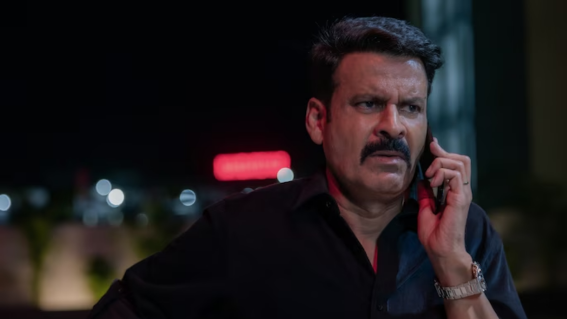
6 February 2026 Punjab Khabarnama Bureau : Uttar Pradesh Chief Minister Yogi Adityanath has ordered the registration of an FIR against the makers of the film Ghooskhor Pandat, triggering a fresh debate around creative freedom, censorship, and political sensitivities in Indian cinema. The controversy intensified after actor Manoj Bajpayee, who is associated with the film, reacted publicly to the development, calling for calm and dialogue rather than confrontation.
According to officials, the FIR was ordered following complaints that the film’s title and content allegedly hurt religious sentiments and promoted stereotypes against a particular community. The complainants argued that the term used in the title was derogatory and could incite social disharmony. Acting on these concerns, the state government directed law enforcement agencies to initiate legal proceedings.
The move quickly became a flashpoint, drawing reactions from political leaders, filmmakers, and civil society groups. Supporters of the FIR said that freedom of expression should not come at the cost of communal harmony or respect for religious identities. Critics, however, accused the government of overreach and stifling artistic expression.
Manoj Bajpayee, one of India’s most respected actors, responded to the controversy with a measured statement. Without directly criticising the government, he emphasised the importance of understanding the intent behind creative works. Bajpayee said cinema often reflects social realities and sparks conversations, and such discussions should ideally take place without resorting to legal action.
The actor also urged people to watch the film or understand its narrative before forming conclusions. He stressed that art should be evaluated in context and that dialogue is a better solution than censorship or criminal cases. His response was widely shared on social media, with many praising his balanced and thoughtful approach.
The filmmakers behind Ghooskhor Pandat defended their work, stating that the film is a social satire aimed at exposing corruption and hypocrisy rather than targeting any religious group. They claimed the title was metaphorical and rooted in the story’s themes, not meant to insult or provoke.
Legal experts note that cases involving alleged hurt sentiments often hinge on intent and context. Indian law allows freedom of speech and expression but places reasonable restrictions in the interest of public order and morality. Courts have repeatedly held that creative works must be assessed as a whole rather than based on isolated elements such as titles or dialogues.
The controversy has once again highlighted the fragile balance between artistic freedom and political or religious sensitivities in India. Over the years, several films, web series, and books have faced legal challenges, bans, or protests, often even before their release. Filmmakers argue that such actions create a climate of fear and self-censorship.
Opposition leaders criticised the FIR order, accusing the state government of selectively targeting artists and using law enforcement to police creative expression. They argued that cinema should not be judged through a political or ideological lens and warned that such actions could discourage meaningful storytelling.
Supporters of the government countered that maintaining social harmony is a legitimate responsibility of the state. They said creators must be mindful of the diverse and sensitive nature of Indian society and avoid content that could be perceived as offensive.
Meanwhile, the film industry has largely rallied around the principle of creative freedom. Several actors, directors, and writers expressed solidarity with the filmmakers, calling for restraint and respect for artistic voices. Industry bodies also urged authorities to allow legal processes to play out without harassment or intimidation.
As the FIR process moves forward, the matter may eventually reach the courts, where the film’s content and intent will be examined in detail. Until then, the controversy continues to fuel debate over where the line should be drawn between free expression and accountability.
For Manoj Bajpayee, the episode underscores the responsibility artists carry in a diverse society, as well as the need for mutual respect between creators, audiences, and authorities. His call for dialogue reflects a broader sentiment within the creative community—that differences should be addressed through discussion, not suppression.
The outcome of this case could have wider implications for filmmakers and artists across the country, shaping how socially and politically sensitive subjects are approached in the future.
Summary
UP CM Yogi Adityanath ordered an FIR against film Ghooskhor Pandat over alleged hurt sentiments, sparking debate on creative freedom, as actor Manoj Bajpayee urged dialogue and understanding.