

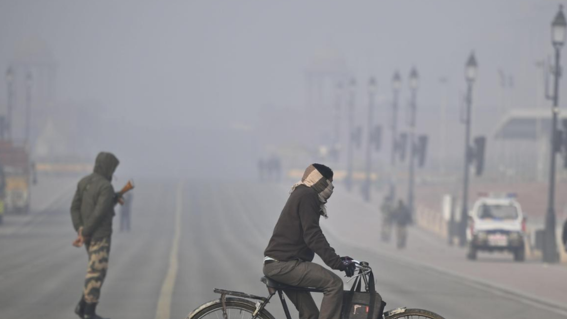
15 January 2026 Punjab Khabarnama Bureau : Delhi woke up to an icy morning and hazardous air on Tuesday as the overall Air Quality Index (AQI) plunged to 357, firmly placing the city in the “very poor” category. The combination of biting cold, dense haze, and toxic pollution once again brought daily life in the national capital to a sluggish crawl, with health experts urging residents to exercise extreme caution.
Winter has long been a challenging season for Delhi’s air quality, but the current conditions have intensified public concern. Low temperatures, calm winds, and high moisture levels in the atmosphere have created the perfect environment for pollutants to remain trapped close to the ground. As a result, residents are breathing air that poses serious risks to both short-term and long-term health.
A Morning of Cold, Smog, and Discomfort
Early morning temperatures dipped sharply across the city, with many areas recording single-digit minimums. A thick layer of haze covered roads, parks, and residential neighborhoods, reducing visibility and adding to the discomfort for commuters. Morning walkers, cyclists, and outdoor workers found themselves navigating not only the cold but also the heavy, polluted air.
Schools reported lower attendance in some areas as parents expressed concern about sending children outdoors in such conditions. Office-goers and daily wage workers, however, had little choice but to continue their routines, exposing themselves to prolonged periods of unhealthy air.
For many residents, the harsh winter-pollution combination has become an exhausting annual cycle, raising ongoing questions about the effectiveness of long-term solutions.
What ‘Very Poor’ AQI Means for Health
An AQI of 357 falls well within the “very poor” category, indicating air that can cause significant discomfort to healthy individuals and serious health effects for vulnerable groups. Medical experts warn that such levels can trigger respiratory problems, worsen asthma, and increase the risk of heart complications.
Children, the elderly, pregnant women, and people with existing lung or heart conditions are particularly at risk. Doctors advise limiting outdoor activity, wearing protective masks, and using air purifiers indoors where possible. Even healthy adults may experience throat irritation, coughing, headaches, and fatigue after prolonged exposure.
Healthcare professionals also caution that repeated exposure to high pollution levels can have cumulative effects, contributing to chronic illnesses over time.
Why Winter Makes Delhi’s Pollution Worse
Every winter, Delhi experiences a sharp deterioration in air quality due to a mix of environmental and human factors. Colder temperatures lead to a phenomenon known as temperature inversion, where a layer of warm air traps cooler air — and pollutants — near the ground. This prevents the normal dispersal of emissions.
Vehicle exhaust, construction dust, industrial emissions, and the burning of biomass continue to be major contributors. In surrounding states, stubble burning also adds to the pollution load, with winds often carrying smoke into the capital region.
The situation is further aggravated by low wind speeds, which reduce the natural dispersal of pollutants. The result is a thick, lingering smog that can persist for days or even weeks.
Impact on Daily Life
The worsening air quality has tangible effects on everyday life in Delhi. Outdoor sports activities are being curtailed, morning exercise routines are disrupted, and many residents are choosing to remain indoors as much as possible. Restaurants with open seating, street vendors, and outdoor markets have reported reduced footfall.
Commuters have also reported discomfort while traveling, particularly those who rely on two-wheelers or public transport. Visibility issues due to haze have led to slower traffic movement in some areas, adding to the city’s daily stress.
Parents, in particular, are worried about the impact on children, with many calling for stricter measures to protect school-going students from prolonged exposure to polluted air.
Government Measures and Public Expectations
Authorities have implemented several measures over the years to tackle winter pollution, including restrictions on construction activities, controls on diesel generators, increased public transport availability, and campaigns encouraging carpooling and reduced vehicle use.
Despite these efforts, many citizens feel that the situation remains largely unchanged. Environmental experts argue that while emergency measures may provide temporary relief, Delhi requires long-term structural solutions. These include better public transport infrastructure, stricter industrial regulation, improved waste management, and stronger coordination between neighboring states.
Public frustration is also growing over the recurring nature of the crisis. Many residents believe that air pollution should be treated as a public health emergency rather than a seasonal inconvenience.
Health Experts Urge Precaution
Doctors and environmental health specialists are advising residents to take practical precautions. These include avoiding outdoor exercise during peak pollution hours, keeping windows closed during high-smog periods, staying hydrated, and seeking medical attention if respiratory symptoms worsen.
N95 masks are widely recommended for those who must travel outdoors, as they can filter out fine particulate matter. Experts also encourage individuals to monitor daily AQI levels and plan activities accordingly.
While individual precautions are important, experts emphasize that systemic change is essential for meaningful improvement.
A Recurring Crisis Demanding Long-Term Solutions
Delhi’s pollution crisis is no longer just an environmental issue — it is a social, economic, and public health challenge. Lost productivity, rising healthcare costs, and declining quality of life are all consequences of persistently toxic air.
Environmentalists argue that meaningful progress will require political will, public participation, and regional cooperation. Solutions must address the root causes of pollution rather than just its symptoms.
Conclusion
As Delhi grapples with biting cold and “very poor” air quality, the AQI reading of 357 serves as another stark reminder of the city’s ongoing environmental crisis. For millions of residents, winter is no longer just about chilly mornings and warm clothing — it has become synonymous with hazardous air and health risks.
Until long-term, coordinated action becomes a priority, Delhi’s residents may continue to endure this annual cycle of smog, discomfort, and concern.
Summary
Delhi woke to biting cold and toxic air as the AQI touched 357 in the ‘very poor’ category, raising health concerns and prompting residents to limit outdoor activities and take precautions against pollution exposure.