

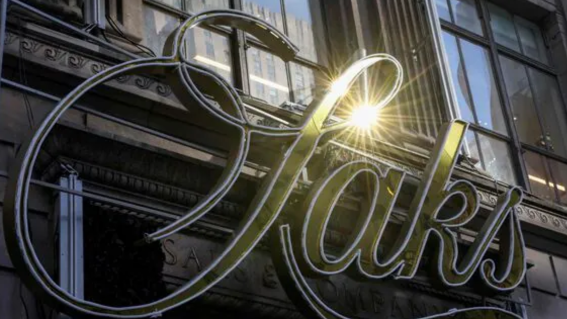
14 January 2026 Punjab Khabarnama Bureau : The U.S. retail industry has been shaken once again as Saks Global, the parent company of luxury department store Saks Fifth Avenue, has filed for bankruptcy just two years after acquiring fellow high-end retailer Neiman Marcus. The development marks a significant moment in the ongoing restructuring of America’s retail landscape and highlights the mounting pressures facing even the most established luxury brands.
Once seen as a bold move to consolidate power in the premium retail segment, the acquisition of Neiman Marcus was intended to create a luxury retail powerhouse capable of competing in a rapidly evolving market. Instead, the deal has become a cautionary tale of overexpansion, rising debt, and shifting consumer behavior.
A High-Profile Acquisition That Promised Growth
When Saks Global acquired Neiman Marcus, industry observers viewed the move as a strategic attempt to strengthen its presence in the luxury sector. The merger was expected to unlock synergies across operations, customer data, supply chains, and digital platforms.
Executives at the time spoke confidently about building a more resilient business, combining heritage brands with modern retail innovation. The goal was clear: dominate the luxury department store space while adapting to the digital future.
However, the integration process proved more complex than anticipated. Operational challenges, overlapping costs, and cultural differences between the two legacy brands created internal friction, complicating the effort to build a unified retail group.
Rising Debt and Mounting Financial Pressure
A key factor behind the bankruptcy filing is the heavy debt burden accumulated through acquisitions, restructuring efforts, and ongoing operational costs. While luxury retail traditionally benefits from higher margins, it is not immune to broader economic pressures.
Rising interest rates, increased borrowing costs, and inflation-driven operational expenses have made it increasingly difficult for retail giants to manage large debt obligations. Saks Global reportedly struggled to maintain profitability while servicing its financial commitments.
Despite efforts to cut costs, streamline operations, and invest in digital transformation, the company was unable to stabilize its financial position.
Changing Consumer Behavior Hits Luxury Retail
The bankruptcy also reflects a deeper transformation in how consumers engage with luxury brands. Younger shoppers increasingly prefer direct-to-consumer brands, online platforms, and personalized digital experiences over traditional department store shopping.
Foot traffic in brick-and-mortar luxury stores has declined in many cities, with consumers opting for curated online experiences and social-media-driven discovery. While Saks Global invested heavily in e-commerce, digital growth was not enough to offset declining in-store sales.
Additionally, post-pandemic spending patterns have shifted. Consumers have become more cautious with discretionary spending, even in higher-income segments. Experiences, travel, and services are increasingly competing with luxury retail for consumer attention and budgets.
The Growing List of U.S. Retail Collapses
Saks Global’s bankruptcy adds to a growing list of major U.S. retailers that have struggled or collapsed in recent years. Department stores, once the cornerstone of American shopping culture, have faced relentless pressure from e-commerce giants, fast-fashion disruptors, and changing lifestyle habits.
Several iconic retail names have already undergone bankruptcies, store closures, or major restructuring. Malls across the country are grappling with vacant anchor stores, declining footfall, and reduced tenant demand.
The downfall of such a prominent luxury group sends a strong message: brand legacy alone is no longer enough to guarantee survival.
Impact on Employees and Stores
The bankruptcy filing has raised immediate concerns for thousands of employees across Saks Global and Neiman Marcus stores, corporate offices, and logistics operations. Job security, store closures, and restructuring plans remain key questions.
While bankruptcy does not necessarily mean liquidation, it often leads to significant reorganization. The company may seek to renegotiate leases, reduce its store footprint, sell off assets, or attract new investors.
Customers, too, are watching closely. Loyalty program members, long-term clients, and luxury shoppers are uncertain about how the restructuring will affect their preferred stores and services.
What Bankruptcy Means for the Brand
Filing for bankruptcy does not automatically signal the end of a company. In many cases, it provides a structured path to reorganization. Retailers often use the process to reduce debt, streamline operations, and reimagine their business models.
For Saks Global, the next phase will likely involve difficult decisions: closing underperforming stores, investing more aggressively in digital platforms, rethinking customer engagement strategies, and possibly divesting certain brands or assets.
The luxury market itself remains strong globally, but success increasingly depends on agility, innovation, and deep understanding of evolving consumer expectations.
Industry Experts See Structural Shift
Retail analysts view the collapse of Saks Global as part of a broader structural transformation rather than an isolated failure. Department stores were built for a different era—one where large physical spaces and centralized shopping destinations defined consumer behavior.
Today’s shoppers demand convenience, personalization, speed, and seamless digital experiences. Brands that fail to adapt quickly enough risk losing relevance, regardless of their heritage.
Experts suggest that the future of luxury retail lies in smaller, experience-driven stores, stronger digital ecosystems, private clienteling services, and deeper emotional connection with customers.
A Warning Sign for the Entire Retail Sector
Saks Global’s bankruptcy serves as a warning to other retailers navigating similar challenges. High debt, slow innovation, and overreliance on outdated retail models can prove fatal, even for industry leaders.
At the same time, the collapse also creates opportunities. New retail concepts, digital-first luxury brands, and tech-enabled shopping experiences are emerging to fill the gap left by traditional giants.
The industry is not dying—it is transforming. Those who evolve with consumer expectations will survive. Those who resist change risk joining the growing list of retail casualties.
Conclusion
The bankruptcy of Saks Global, just two years after its acquisition of Neiman Marcus, marks a pivotal moment for American retail. It underscores the harsh reality that legacy, scale, and prestige are no longer guarantees of success in a rapidly changing marketplace.
As the company navigates restructuring and the industry continues to evolve, the story of Saks Global stands as both a cautionary tale and a reflection of the profound transformation reshaping global retail.
Summary
Saks Global has filed for bankruptcy two years after acquiring Neiman Marcus, highlighting mounting debt, changing consumer behavior, and the ongoing collapse of major U.S. retail giants struggling to adapt.