

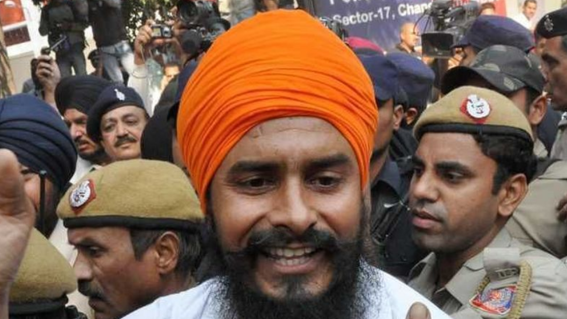
13 January 2026 Punjab Khabarnama Bureau : The Supreme Court has deferred the hearing on a petition filed by Balwant Singh Hawara, a convict in the assassination case of former Punjab Chief Minister Beant Singh, seeking his transfer from a jail outside the state to a prison in Punjab. The decision has once again brought attention to one of the most sensitive and historically significant cases in Punjab’s political history.
Hawara, who is currently lodged in a high-security prison outside Punjab, has approached the apex court arguing that he should be shifted closer to his family and legal support network. His plea has sparked renewed debate over prisoners’ rights, security considerations, and the long-lasting impact of political violence on public memory.
Background of the Beant Singh Assassination Case
The assassination of Beant Singh in 1995 marked a turning point in Punjab’s political landscape. He was widely credited with restoring a degree of stability in the state during a period marked by militancy and unrest. His killing in a suicide bomb attack shocked the nation and led to a large-scale investigation, arrests, and prolonged legal proceedings.
Balwant Singh Hawara was convicted for his role in the conspiracy related to the assassination. Over the years, his case has remained the subject of intense political, legal, and emotional discourse in Punjab and beyond.
The Transfer Plea
In his petition before the Supreme Court, Hawara has sought a transfer to a Punjab jail, citing humanitarian grounds. His legal team has argued that incarceration far from his home state creates difficulties in meeting family members, consulting lawyers, and maintaining social connections.
The plea also highlights the broader issue of whether prisoners should, where possible, be housed closer to their place of origin, particularly when there is no immediate security threat that necessitates their continued detention in distant high-security facilities.
Supporters of Hawara’s request argue that the transfer would be in line with principles of human dignity and prisoners’ rights. They emphasize that long-term incarceration should not involve unnecessary hardship beyond the sentence itself.
Supreme Court Defers Hearing
The Supreme Court, however, has chosen to defer the hearing on the plea. While no final determination has been made, the postponement indicates that the matter requires further consideration, including responses from relevant authorities and a deeper examination of security implications.
Legal experts note that such cases often involve complex considerations. Courts must balance individual rights against broader concerns such as public safety, administrative feasibility, and the potential impact on law and order.
The deferral does not imply acceptance or rejection of the plea but suggests that the court is proceeding cautiously given the sensitive nature of the case.
Security and Administrative Concerns
One of the key factors likely influencing the court’s approach is the issue of security. High-profile convicts, particularly those linked to politically sensitive cases, are often housed in high-security facilities to prevent potential threats, escape risks, or unrest.
Authorities have historically justified keeping such prisoners outside their home states on the grounds that their presence could trigger public reactions or create law-and-order challenges. In Hawara’s case, concerns about public sentiment and political symbolism continue to play a role.
At the same time, prison administration norms also recognize the importance of maintaining prisoners’ mental well-being, which can be supported by family contact and social connections.
Political and Public Reactions
The case continues to evoke strong reactions in Punjab. For some, Hawara remains a controversial figure associated with a painful chapter in the state’s history. For others, he is viewed through a different political lens, with calls for fair treatment and humane consideration.
Various political groups and civil society voices have, over the years, expressed differing views on his imprisonment and treatment. The transfer plea has once again brought these divisions into focus, highlighting how historical events continue to shape present-day discourse.
Legal Perspectives on Prisoner Transfers
Legal experts point out that prisoner transfer requests are not uncommon and are usually evaluated based on factors such as:
- The nature of the crime
- The security risk posed by the prisoner
- The impact on public order
- The prisoner’s health and family circumstances
- Administrative feasibility
Courts have, in past cases, allowed transfers when convinced that the request is genuine and does not compromise safety. However, in high-profile cases like this one, scrutiny tends to be significantly higher.
Human Rights and Prisoner Welfare
The case also raises broader questions about prisoner rights in India. Human rights advocates argue that even those convicted of serious crimes are entitled to dignity, fair treatment, and access to family and legal support.
They emphasize that long-term isolation from family can have serious psychological consequences and that the justice system should strive to balance punishment with humane treatment.
At the same time, victims’ families and sections of the public often stress the importance of remembering the gravity of the crime and ensuring that justice is not perceived as being diluted.
What Lies Ahead
With the hearing deferred, the matter is likely to return to the Supreme Court at a later date after additional submissions from both sides. Authorities may be asked to provide further clarification on security concerns, while Hawara’s legal team is expected to continue pressing humanitarian grounds.
The eventual decision will be closely watched, not only for its impact on this specific case but also for what it may signal about the judiciary’s approach to similar petitions in the future.
Conclusion
The Supreme Court’s decision to defer the hearing on Balwant Singh Hawara’s plea for transfer to a Punjab jail underscores the complexity of cases involving politically sensitive convictions. As the legal process continues, the case remains a powerful reminder of Punjab’s turbulent past and the ongoing challenge of balancing justice, security, and human dignity within the criminal justice system.
Summary
The Supreme Court has deferred hearing on convict Balwant Singh Hawara’s plea seeking transfer to a Punjab jail in the Beant Singh assassination case, citing the need for further consideration of legal and security aspects.