

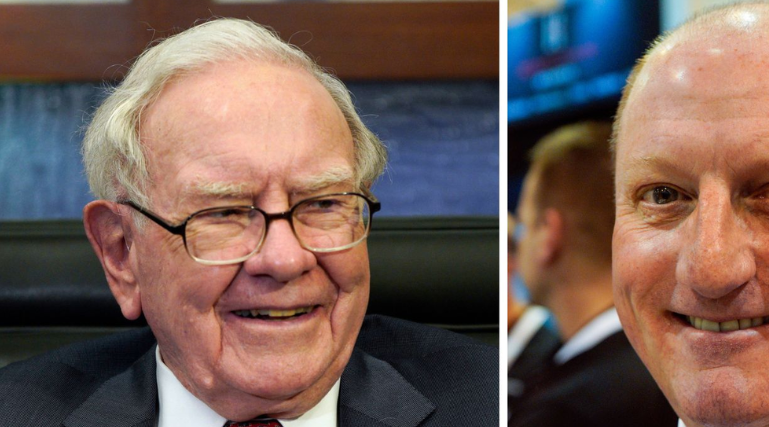
2 January 2026 Punjab Khabarnama Bureau : The transition of leadership at Berkshire Hathaway marks the end of one of the most extraordinary chapters in corporate history. After more than six decades at the helm, legendary investor Warren Buffett has stepped aside as Chief Executive Officer, passing the responsibility to Greg Abel, a long-time insider trusted to preserve and guide the company into its next era.
Buffett’s tenure transformed Berkshire Hathaway from a struggling textile company into a vast, diversified conglomerate valued at over a trillion dollars, with interests spanning insurance, railroads, utilities, manufacturing, retail, and a massive stock portfolio. His calm demeanour, disciplined value-investing philosophy, and long-term outlook earned him global admiration and the nickname “Oracle of Omaha.” While Buffett will continue as Chairman, day-to-day leadership now rests with Abel.
Who Is Greg Abel?
Greg Abel, in his early 60s, is a Canadian-born executive known for his operational expertise rather than public charisma. Unlike Buffett, who became a global icon through annual letters and shareholder meetings, Abel has maintained a relatively low public profile throughout his career. Yet within Berkshire, he is widely respected for his deep understanding of the company’s businesses and its distinctive culture.
Abel grew up in Edmonton, Canada, and began his professional journey in accounting. His career took a pivotal turn when he entered the energy sector, eventually becoming closely associated with Berkshire Hathaway through its energy investments. Over time, he rose to become the head of Berkshire Hathaway Energy, overseeing its expansion into one of the largest utility and energy groups in North America.
His success in managing capital-intensive, regulated businesses earned him greater responsibility. He was later appointed Vice Chairman of Berkshire Hathaway, overseeing all non-insurance operations — a portfolio that includes railroads, manufacturing companies, consumer brands, and retail chains. This role effectively positioned him as Buffett’s operational right hand, making him the natural choice for succession.
Why the Succession Matters
The handover of leadership at Berkshire Hathaway is significant not only because of Buffett’s stature, but also because of the company’s unique structure. Berkshire operates as a collection of largely autonomous businesses, run by managers who value independence and long-term thinking. Maintaining this culture is critical, and Buffett has repeatedly expressed confidence that Abel understands and respects it.
For years, investors speculated about how Berkshire would function without Buffett as CEO. The announcement of Abel’s succession was designed to remove uncertainty and reassure shareholders that continuity, not disruption, would define the transition. The board’s unanimous support reflects confidence in Abel’s ability to manage both the company’s operations and its immense capital base.
A Different Leadership Style
While Buffett is known for his folksy wisdom, humour, and public accessibility, Abel’s leadership style is more reserved and operationally focused. He is considered methodical, detail-oriented, and disciplined — qualities well-suited to overseeing Berkshire’s diverse businesses.
Market observers expect Abel to avoid dramatic changes. Berkshire’s core principles — decentralisation, minimal bureaucracy, conservative financing, and long-term investing — are likely to remain intact. Abel has worked within this framework for years and is seen as a steward of Buffett’s philosophy rather than a radical reformer.
That said, Abel inherits a company facing new challenges. Global markets are more volatile, technological disruption is accelerating, and regulatory scrutiny across industries is increasing. How he balances tradition with adaptation will define his tenure.
Capital Allocation and Strategic Choices
One of Abel’s most critical responsibilities will be capital allocation, a task Buffett famously excelled at. Berkshire sits on enormous cash reserves, giving it flexibility to pursue acquisitions, invest in public markets, or return capital to shareholders. Every decision will be closely watched by investors accustomed to Buffett’s exceptional track record.
Analysts believe Abel’s background in infrastructure and energy could influence future investment decisions, potentially favouring stable, cash-generating businesses. However, he will also need to evaluate opportunities in a rapidly evolving global economy while maintaining Berkshire’s conservative risk profile.
Market and Investor Reactions
Initial reactions to Abel’s appointment have been largely positive. Investors take comfort in the fact that the transition was carefully planned and communicated well in advance. Many view Abel as a steady hand who prioritises long-term value over short-term market pressures.
Employees across Berkshire’s vast portfolio of companies are also expected to experience continuity rather than upheaval. The decentralised management model — one of Berkshire’s defining features — is unlikely to change under Abel’s leadership.
A Legacy to Uphold
Stepping into Warren Buffett’s role is no ordinary challenge. Buffett’s influence on Berkshire Hathaway and global investing is unparalleled, and comparisons will be inevitable. However, Abel is not expected to replicate Buffett’s persona. Instead, his success will be measured by how effectively he preserves Berkshire’s culture, sustains shareholder value, and navigates the company through a changing economic landscape.
Looking Ahead
The transition from Warren Buffett to Greg Abel represents both an ending and a beginning. While Buffett’s era as CEO has concluded, the principles he embedded in Berkshire Hathaway continue to shape its future. Abel now carries the responsibility of honouring that legacy while writing his own chapter in the history of one of the world’s most influential companies.
As Berkshire Hathaway moves forward under new leadership, investors, employees, and markets alike will be watching closely — not for dramatic change, but for steady, thoughtful stewardship of a business empire built to last.
Summary
Greg Abel succeeds Warren Buffett as Berkshire Hathaway CEO, inheriting a trillion-dollar conglomerate built on long-term value investing, decentralised management, and one of the most legendary legacies in global business.