

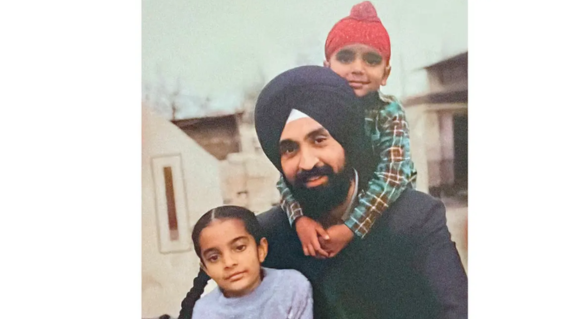
29 December 2025 Punjab Khabarnama Bureau : In a significant development for Punjabi cinema, Justice Ranjit Singh has urged the Central Board of Film Certification (CBFC) to approve the release of Punjab ’95, starring Diljit Dosanjh, without imposing any cuts. The recommendation comes amid ongoing debates over creative freedom and censorship in regional films.
Punjab ’95, a historical drama set against the backdrop of turbulent times in Punjab, has attracted attention for its realistic portrayal of events. While the film aims to depict history authentically, CBFC reportedly raised concerns about certain scenes, suggesting edits to comply with certification guidelines.
Justice Ranjit Singh, recognizing the film’s cultural and historical significance, intervened and advised that the CBFC consider releasing the movie in its original form. He emphasized that censorship should not compromise the narrative’s integrity, especially when the content is intended to reflect real events sensitively.
The recommendation has been welcomed by filmmakers and cinema enthusiasts, who view it as a step toward respecting artistic expression in regional cinema. Punjabi film industry insiders argue that heavy censorship can dilute the essence of storytelling, particularly in films that tackle complex historical or social issues.
Diljit Dosanjh, one of the most prominent figures in Punjabi cinema, is widely admired for his versatility as an actor, singer, and entertainer. His portrayal in Punjab ’95 has been described as compelling, capturing both the emotional depth and historical context of the period. Industry experts suggest that releasing the film without cuts would preserve the authenticity of Dosanjh’s performance and the director’s vision.
The controversy surrounding the CBFC’s initial feedback sparked widespread discussion on social media. Fans, critics, and cultural commentators debated the need for edits versus the importance of creative freedom. Many argued that regional films should be given leeway to depict historical realities truthfully, without unnecessary interference.
Justice Ranjit Singh’s appeal highlights the delicate balance between regulatory oversight and artistic liberty. He noted that while censorship serves a purpose in maintaining public decency and safety, excessive restrictions can hinder the public’s understanding of historical or cultural narratives. His intervention is seen as an acknowledgment of the film’s educational and cultural value, alongside its entertainment quotient.
The Punjab government also expressed support for the film’s uncut release, emphasizing the importance of promoting regional cinema and preserving cultural memory. Authorities highlighted that movies like Punjab ’95 play a crucial role in connecting younger audiences with historical events, fostering awareness and dialogue.
Industry observers believe that the CBFC’s decision on Punjab ’95 could set a precedent for future Punjabi and regional films. Historically, regional cinema has faced stricter scrutiny compared to mainstream Bollywood productions, leading to debates on fairness and representation. The outcome of this case may influence how certification bodies handle similar cases in the future.
The film’s producers have welcomed Justice Singh’s recommendation and expressed hope that the CBFC will act promptly. They stressed that timely clearance is essential for the film’s release schedule, promotional campaigns, and audience reach. With Diljit Dosanjh’s star power, Punjab ’95 is expected to attract significant attention both domestically and internationally.
Critics who have previewed the film describe it as a thoughtful, well-executed project that balances historical accuracy with engaging storytelling. The director reportedly took great care to ensure that sensitive subjects are handled with nuance, avoiding sensationalism while remaining truthful. This approach, experts argue, strengthens the case for releasing the film without mandated cuts.
Cultural commentators have noted that films like Punjab ’95 are vital for regional representation in Indian cinema. They argue that censorship decisions should be context-sensitive, especially when addressing historical narratives that resonate deeply with local audiences. The discussion around the film has reignited debates about the role of the CBFC in contemporary cinema.
As the release date approaches, anticipation around Punjab ’95 continues to build. Fans are closely monitoring CBFC updates and the filmmakers’ statements, eager to experience Diljit Dosanjh’s portrayal in full. Analysts predict that the film’s reception could be further amplified if it releases without cuts, setting a benchmark for future Punjabi productions.
In conclusion, Justice Ranjit Singh’s appeal to the CBFC underscores the importance of balancing regulatory responsibility with artistic integrity. Punjab ’95 is now at the center of a wider conversation about creative freedom, cultural preservation, and the evolving role of regional cinema in India’s film landscape. A favorable decision from the CBFC would not only benefit the film but also send a positive signal to filmmakers seeking to tell authentic stories without compromise.
Summary
Justice Ranjit Singh urges CBFC to clear Diljit Dosanjh-starrer Punjab ’95 without cuts, highlighting artistic freedom, historical accuracy, and the importance of authentic regional storytelling in Punjabi cinema.