

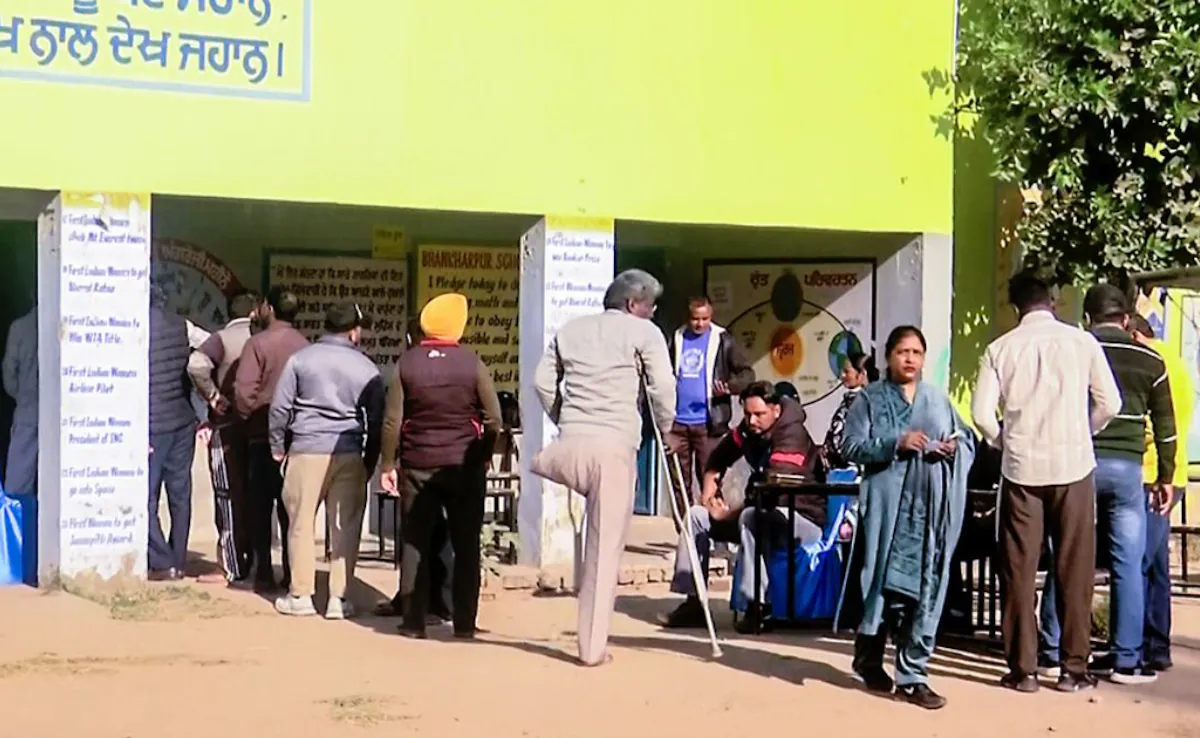
18 December 2025 Punjab Khabarnama Bureau : In a bittersweet victory, Punjab’s ruling Aam Aadmi Party (AAP) swept the zila parishad and panchayat samiti elections held on Sunday even as some of its top leaders failed to secure wins for party candidates on their home turf.
Prominent AAP leaders who could not get party candidates elected to either the zila parishad or panchayat samiti from their villages include Vidhan Sabha Speaker Kultar Singh Sandhwan (Sandhwan village), Agriculture Minister Gurmeet Singh Khudian (Khudian), MP Raj Kumar Chabbewal (Manjhi village), MP Gurmeet Singh Meet Hayer (Kurar village), AAP chief spokesperson Kuldeep Dhaliwal (Jagdev Kalan), MLAs Sukhveer Singh Maiserkhana (Maiserkhana village), Master Jagsir Singh (Chak Fatehsinghwala village), Kulwant Singh Pandori (Pandori) and AAP chief whip with cabinet rank Baljinder Kaur (Jaga Ram Tirath).
Except for Manjhi and Pandori, where the Congress won, AAP candidates were defeated by Shiromani Akali Dal (SAD) nominees in the remaining above-mentioned villages. In Loham village (Ferozepur), AAP secured just one vote, while in Chief Minister Bhagwant Mann’s native Satauj village, the BJP managed only one vote.
AAP state president Aman Arora, while congratulating his party for its overall performance, claimed these were the most unbiased and free elections in the state’s history. “People have given their mandate on the basis of the good public work done by the AAP government,” he said, adding that the party had won 88 per cent of zila parishad seats and 68 per cent of panchayat samiti seats.
While AAP performed exceptionally well in Zila Parishads, Opposition candidates dented its dominance by winning over 30 per cent of panchayat samiti seats. In the Majha region, AAP enjoyed a clear edge, while in Malwa, it faced stiff competition from both the Congress and SAD.
Traditionally, rural body polls have favoured the ruling party. In the past three zila parishad and panchayat samiti elections, the Akali-BJP alliance won in 2008 and 2013, while the Congress swept the 2018 polls when it was in power. This time, the elections are being viewed as a curtain-raiser for the 2027 Vidhan Sabha polls, just 14 months away.
After counting began, Opposition leaders alleged that their polling agents were stopped from entering counting centres at some places. There were also complaints of officials wrongly declaring ruling party candidates as winners. Following these complaints, State Election Commissioner Raj Kamal Chaudhari directed returning officers to issue election certificates immediately after counting in each zone.
By 11 pm, results for 120 of 346 (one had no valid nomination) zila parishad zones and 1,605 of 2,838 panchayat samiti zones had been declared, showing a clear lead for AAP, followed by the Congress. AAP won 80 zila parishad and 828 panchayat samiti seats.
A key takeaway, however, was the apparent revival of the SAD. After nearly a decade in political doldrums, the SAD won 152 panchayat samiti seats and six zila parishad seats, with strong performances in Faridkot, Bathinda, Mansa and Muktsar.
SAD president Sukhbir Singh Badal told The Tribune that his party would have fared much better had the elections been free and fair. He alleged, “The ruling party misused the government machinery and ensured that nomination papers of 1,100 panchayat samiti and 100 zila parishad candidates were rejected. That said, the SAD is going from strength to strength.”
The BJP appeared to bear the brunt of recent controversial decisions later withdrawn, including issues related to Chandigarh’s administration and Panjab University Senate. Despite making some rural inroads, the party managed to win just 26 panchayat samiti and two ZP seats.
The Congress put up a respectable show, winning 18 zila parishad seats and 196 panchayat samiti seats. Its performance remained largely unaffected by the Navjot Kaur Sidhu-led “Rs 500 crore for CM post” controversy or infighting. “I am not surprised by the results. The ruling dispensation used strong-arm tactics, but I am satisfied with the performance of Congress workers,” said state Congress chief Amrinder Singh Raja Warring. The party remained competitive in Jalandhar, Nawanshahr, Kapurthala and Chamkaur Sahib.
In Phillaur, the BSP won nine block samiti seats. Overall, the BSP secured 16 panchayat samiti and three zila parishad seats in Jalandhar, emerging as the third significant player after AAP and the Congress.
Summary:
The Aam Aadmi Party (AAP) recorded a strong performance in Punjab’s rural body elections, winning a majority of seats across villages and blocks. However, the party faced setbacks in several constituencies considered strongholds of its senior leaders, indicating a mixed mandate and highlighting local-level challenges despite overall success.