

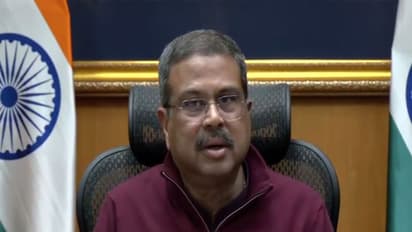
17 December 2025 Punjab Khabarnama Bureau : Amid concerns voiced by the Opposition that the Viksit Bharat Shiksha Adhishthan Bill, 2025 centralises power, Union Education Minister Dharmendra Pradhan has said that states would retain similar powers they presently have and would drive towards a flexible and innovation-driven education system.
The Lok Sabha on Tuesday passed a resolution to refer the Bill, which proposes to set up a 13-member body for regulating higher education institutions, to a Joint Parliamentary Committee (JPC). The proposal was moved by Pradhan.
While introducing the Bill on December 15, the government had said it would like the Viksit Bharat Shiksha Adhishthan Bill to be sent to a joint panel of both Houses after objections had been raised by several members from the Opposition.
The 31-member JPC will have 21 MPs from the Lok Sabha and 10 from Rajya Sabha, and it will submit its report by the last day of the first part of the Budget Session, 2026.
“There is no threat to institutional autonomy. If the Opposition has some concerns or misconceptions, they can be addressed by the JPC. The powers with the states will remain as they are at present,” Pradhan said.
The Bill provides for the establishment of the Viksit Bharat Shiksha Adhishthan as an apex body, along with three councils: the Viksit Bharat Shiksha Viniyaman Parishad (Regulatory Council), the Viksit Bharat Shiksha Gunvatta Parishad (Accreditation Council), and the Viksit Bharat Shiksha Manak Parishad (Standards Council).
It further provides for repealing the University Grants Commission Act (UGC), 1956, the All India Council for Technical Education Act (AICTE), 1987, and the National Council for Teacher Education Act (NCTE), 1993. All higher education institutions currently under the purview of the Education Ministry, UGC, AICTE and NCTE would come under the new Viksit Bharat Shiksha Adhishthan for the determination of standards.
Presently, the UGC regulates non-technical higher education institutions, the AICTE oversees technical education, and the NCTE regulates teacher education in the country.
Under the existing systems of funding to Higher Education Institutions (HEIs), the Centre disburses grants to central universities through the UGC (grants released quarterly to the UGC and further distributed monthly to universities). Grants are also released directly to Institutes of National Importance (INIs) on a monthly basis.
“Considering that the National Education Policy (NEP), 2020 also envisages separating funding from the functions of academic standard setting, regulation and accreditation, the disbursal of grants to centrally funded HEIs shall be ensured through mechanisms devised by the Education Ministry, which will be similar to or better than the existing mechanisms,” officials said.
They added that feedback from the Regulatory Council on institutional performance would be a major factor to decide the quantum of funds to be distributed to higher education institutions through the Ministry.
Summary:
Union Education Minister Dharmendra Pradhan said the proposed new Education Bill aims to create a flexible, student-centric, and innovation-driven education system. The bill focuses on encouraging creativity, interdisciplinary learning, skill development, and adaptability to prepare students for future challenges while strengthening India’s education framework.