

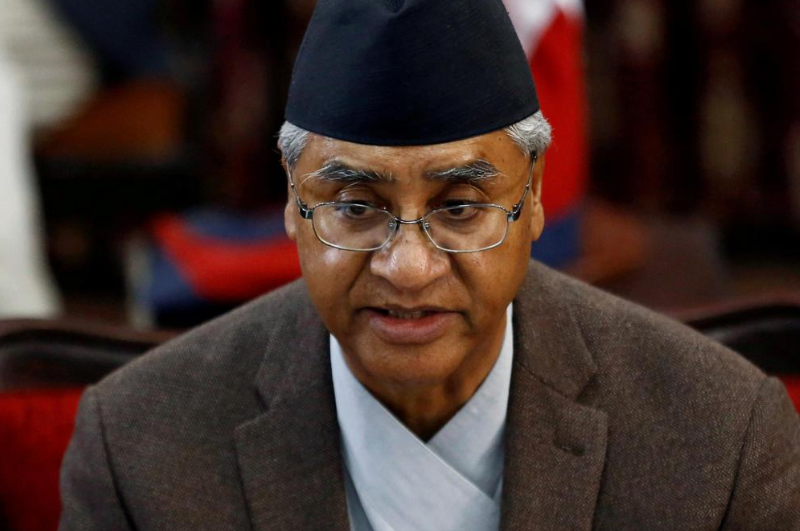
9 April 2026 Punjab Khabarnama Bureau : Nepal has issued an arrest warrant against former prime minister Sher Bahadur Deuba as part of an ongoing corruption and money laundering investigation, marking a dramatic escalation in the country’s anti-graft crackdown.
Authorities confirmed that the warrant was issued following a request from Nepal’s Department of Money Laundering Investigation, making Deuba one of the most high-profile political figures to face such action in recent times.
The development comes amid a broader push by the new government to tackle corruption and restore public trust in political institutions. Deuba, a five-time prime minister and senior leader of the Nepali Congress party, has denied all allegations, calling them “false propaganda” and part of a conspiracy against him and his family.
Warrant Also Issued Against Wife
In a significant extension of the probe, authorities have also issued an arrest warrant against Deuba’s wife, Arzu Rana Deuba, who previously served as Nepal’s foreign minister. The action suggests that investigators are examining financial transactions and assets linked to the couple.
Officials indicated that the investigation centers around alleged money laundering and unexplained wealth accumulation. As part of the probe, authorities are scrutinizing financial records, properties, and other assets connected to the family.
Currently Abroad, Interpol Action Likely
Deuba and his wife are reportedly outside Nepal, undergoing medical treatment. While officials have not disclosed their exact location, reports suggest they have recently been in Singapore.
With the couple abroad, Nepalese authorities are expected to seek international assistance, potentially requesting an Interpol Red Notice to facilitate their return. This step would allow global law enforcement agencies to locate and detain them if necessary.
Part of Wider Anti-Corruption Crackdown
The arrest warrant is part of a broader campaign targeting high-level political figures. In recent weeks, Nepal has witnessed action against several former leaders, including ex-prime minister KP Sharma Oli and other senior officials, in connection with corruption and protest-related cases.
The crackdown follows widespread anti-corruption protests that erupted in 2025, driven largely by youth frustration over governance, economic hardship, and allegations of systemic corruption. The protests escalated rapidly, leading to significant political upheaval and eventually the fall of the previous government.
The current administration, led by reform-oriented leadership, has pledged to clean up the political system and hold influential figures accountable, regardless of their status.
Controversy and Political Reactions
The case has sparked intense political debate in Nepal. Supporters of Deuba argue that the investigation is politically motivated, aimed at weakening opposition figures. Critics, however, view it as a long-overdue step toward accountability.
Deuba himself has maintained that his public life has been transparent and that he has always complied with legal requirements regarding asset disclosures. He has also dismissed circulating reports about large sums of cash allegedly found at his residence as fabricated or manipulated content.
Legal and Political Implications
Legal experts say the issuance of an arrest warrant does not imply guilt but indicates that investigators have found sufficient grounds to proceed with formal action. The case is expected to move through Nepal’s judicial system, which will determine the validity of the charges.
Politically, the development could have far-reaching implications. As a veteran leader with decades of influence, Deuba’s legal troubles may reshape the dynamics within Nepal’s political landscape, particularly within the Nepali Congress party.
Public Sentiment and Future Outlook
Public reaction has been mixed but largely reflects a growing demand for accountability. Many citizens see the move as a positive step toward combating corruption, while others remain cautious about potential misuse of investigative agencies.
The coming weeks will be crucial as authorities decide whether to pursue international legal mechanisms and as more details of the investigation emerge. The case could set a precedent for how Nepal handles corruption allegations against top political figures.
For now, the arrest warrant signals a significant moment in Nepal’s political and legal history—one that underscores the increasing pressure on leaders to maintain transparency and accountability.
Summary
Nepal issued an arrest warrant against ex-PM Sher Bahadur Deuba and his wife in a corruption probe, as part of a wider anti-graft crackdown amid rising political and public pressure.