

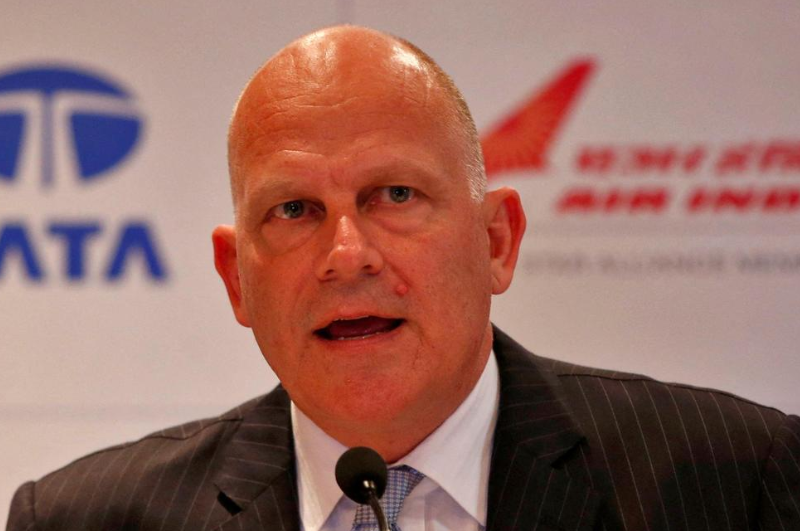
7 April 2026 Punjab Khabarnama Bureau : In a significant development for India’s aviation sector, Campbell Wilson has stepped down as the Chief Executive Officer of Air India, bringing an end to his tenure at a crucial phase of the airline’s transformation journey under the Tata Group.
Wilson, who took charge in 2022 following Air India’s return to the Tata Group, played a key role in initiating the airline’s ambitious turnaround strategy. His resignation comes at a time when the carrier has been undergoing extensive restructuring, modernization, and expansion efforts aimed at reclaiming its position in the global aviation market.
Sources indicate that the resignation was communicated internally, though the reasons behind the decision have not been officially detailed. Industry observers suggest that leadership transitions are not uncommon during large-scale transformation processes, especially in sectors as complex and competitive as aviation.
During his tenure, Wilson oversaw several major initiatives designed to revamp Air India’s operations. These included fleet expansion, service improvements, and integration of systems across the airline’s various business units. One of the most notable developments was the record aircraft order placed by Air India, signaling its intent to expand capacity and enhance connectivity.
Wilson also focused on improving customer experience, an area where the airline had faced criticism in the past. Efforts were made to upgrade cabins, streamline operations, and enhance service quality, reflecting the broader vision of the Tata Group to rebuild Air India as a world-class airline.
The airline’s transformation plan, often referred to as a long-term roadmap, aimed to address legacy issues while positioning Air India for future growth. This included investments in technology, workforce training, and operational efficiency.
Despite these efforts, challenges remained. The aviation industry continues to face headwinds such as fluctuating fuel prices, intense competition, and evolving regulatory requirements. Managing these factors while executing a large-scale transformation is a complex task.
Wilson’s departure raises questions about the next phase of Air India’s journey. The Tata Group is expected to announce a successor who will continue the restructuring process and build on the progress made so far. Leadership continuity will be crucial to maintaining momentum and achieving the airline’s strategic goals.
Industry experts believe that the new leadership will need to focus on consolidating gains while addressing ongoing challenges. Strengthening operational reliability, enhancing customer satisfaction, and improving financial performance are likely to remain key priorities.
The resignation also comes at a time when Air India is expanding its international presence. The airline has been working to increase its share in global markets, competing with established carriers and leveraging India’s growing aviation demand.
Employees and stakeholders are closely watching the developments, as leadership changes can have implications for organizational culture and strategy. Clear communication and a smooth transition will be essential to ensure stability.
The broader aviation sector in India has been witnessing rapid growth, driven by increasing passenger demand and infrastructure development. Air India’s transformation is a critical part of this ecosystem, given its scale and historical significance.
Wilson’s tenure will likely be remembered for laying the foundation for the airline’s revival. While the transformation is still ongoing, the steps taken during this period have set the stage for future progress.
The Tata Group, known for its strong management practices, is expected to handle the transition strategically. Its commitment to reviving Air India remains unchanged, and the focus will continue to be on building a competitive and sustainable airline.
As the industry absorbs the news, attention will shift to the appointment of a new CEO and the direction the airline takes in the coming months. The success of Air India’s transformation will depend on consistent execution and the ability to adapt to changing market conditions.
In conclusion, Campbell Wilson’s resignation marks a pivotal moment for Air India. While his departure creates uncertainty, it also opens a new chapter in the airline’s transformation journey, with opportunities to build on existing progress and achieve long-term success.
Summary
Air India CEO Campbell Wilson resigned amid the airline’s transformation, leaving a leadership gap as Tata Group continues restructuring efforts to modernize operations and strengthen its global aviation presence.