

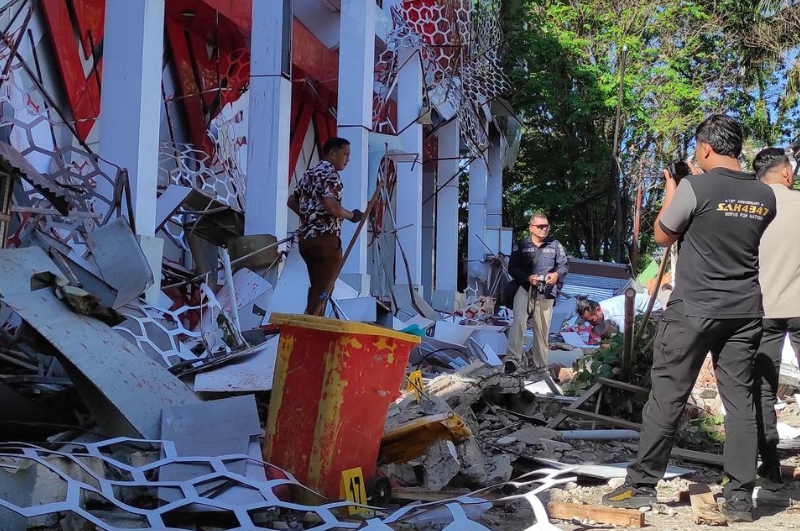
2 April 2026 Punjab Khabarnama Bureau : A powerful undersea earthquake struck off the coast of Indonesia, causing widespread panic, damaging buildings, killing at least one person, and triggering a small tsunami. The quake, measured at around magnitude 7.4, hit the seismically active Molucca Sea region, an area known for frequent tectonic activity due to its location along the Pacific “Ring of Fire.”
The tremor was strongly felt across several parts of northern Indonesia, including cities like Ternate and Bitung. Residents described scenes of chaos as buildings shook violently for several seconds, prompting people to rush out of homes, offices, and public places in fear. The shaking reportedly lasted between 10 to 20 seconds, enough to cause structural damage in multiple locations.
Authorities confirmed that at least one person lost their life in the disaster. The victim, an elderly woman in Manado, died after being trapped under debris when a building collapsed during the quake. Several others were reported injured, with emergency services responding quickly to assess the situation and provide aid.
Initial assessments revealed varying degrees of damage to infrastructure. Homes, a church, and other buildings suffered cracks or partial collapse, particularly in areas closer to the epicenter. Local disaster management agencies have begun evaluating the full extent of the destruction, though early indications suggest that while damage was significant in certain pockets, it was not catastrophic on a large scale.
The earthquake also triggered a tsunami alert shortly after it struck. Monitoring agencies warned that waves could affect coastal regions within a wide radius, including parts of Indonesia and nearby countries such as the Philippines and Malaysia. In response, authorities urged residents in vulnerable coastal areas to move to higher ground as a precaution.
Small tsunami waves were subsequently recorded in several locations. The highest waves reached approximately 0.75 meters above normal sea level in parts of North Sulawesi, while smaller waves were observed in other coastal regions. Although these waves were relatively modest compared to major tsunami events, they were enough to raise concerns and prompt emergency measures.
Fortunately, the tsunami threat subsided within a few hours. Officials later lifted the warning after confirming that the risk of larger waves had passed. This development brought relief to residents and authorities alike, as fears of a more destructive secondary disaster diminished.
In the aftermath of the quake, dozens of aftershocks were recorded, some of them strong enough to be felt by residents. These aftershocks have kept communities on edge, with authorities advising people to remain cautious and avoid entering damaged buildings until safety checks are completed.
Indonesia’s geographical position makes it particularly vulnerable to earthquakes and volcanic activity. The country lies along the Pacific Ring of Fire, a zone characterized by intense seismic and volcanic activity due to the movement of tectonic plates. As a result, earthquakes of varying magnitudes are relatively common, though not all lead to significant damage or casualties.
This latest घटना serves as a reminder of the risks faced by communities living in such regions. Despite improvements in early warning systems and disaster preparedness, the sudden nature of earthquakes makes them difficult to predict and manage. Authorities continue to emphasize the importance of preparedness, including evacuation plans and public awareness.
Emergency response teams have been deployed to affected areas to assist with rescue operations, medical aid, and damage assessment. Efforts are also underway to restore normalcy, including clearing debris and ensuring that essential services remain operational.
Local governments have urged residents to remain vigilant in the coming days, as aftershocks could continue. People have been advised to stay informed through official channels and follow safety guidelines issued by disaster management authorities.
The earthquake has also drawn attention internationally, with monitoring agencies and neighboring countries closely tracking developments. While the impact outside Indonesia appears limited, the event highlights the interconnected nature of regional disaster risks.
In conclusion, the powerful earthquake off Indonesia has once again underscored the region’s vulnerability to natural disasters. While the loss of life and damage were relatively limited compared to past events, the incident serves as a stark reminder of the need for continued vigilance, preparedness, and resilience in the face of natural hazards.
Summary
A 7.4 magnitude earthquake struck Indonesia, killing one, damaging buildings, and triggering small tsunami waves, later subsiding, while authorities continue rescue efforts and monitor aftershocks.