

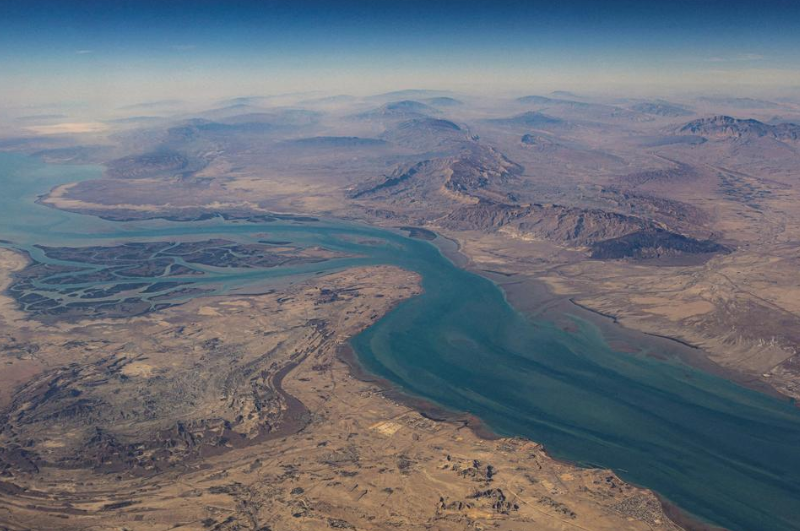
31 March 2026 Punjab Khabarnama Bureau : The ongoing Iran–Israel conflict has taken a troubling turn after a strike damaged a desalination plant on Qeshm Island, a key facility that supplies fresh water to the region. The incident has heightened concerns about the growing impact of the conflict on civilian infrastructure and the potential humanitarian consequences.
Qeshm Island, located near the strategically vital Strait of Hormuz, plays an important role not only in Iran’s coastal economy but also in regional stability. The Strait of Hormuz is one of the world’s busiest oil transit routes, and any escalation in this area carries significant global implications. The latest strike has therefore raised alarm not just locally but internationally as well.
Desalination plants are critical in many parts of the Middle East, where freshwater resources are limited. These facilities convert seawater into potable water, making them essential for daily life. The damage to the plant on Qeshm Island threatens to disrupt water supply for thousands of residents, increasing the risk of shortages in an already fragile environment.
While details about the extent of the damage are still emerging, initial reports suggest that the facility has suffered operational setbacks that could take time to repair. Authorities are working to assess the situation and restore services, but the incident has exposed the vulnerability of essential infrastructure during times of conflict.
The strike also underscores a broader shift in the nature of the war. What initially involved targeted military operations has increasingly expanded to include critical infrastructure. This development raises serious concerns about the rules of engagement and the protection of civilian assets in conflict zones.
So far, responsibility for the attack remains unclear, with conflicting claims and denials from various parties involved in the conflict. Both sides have previously maintained that they do not intentionally target civilian infrastructure. However, incidents like this highlight the difficulty of containing damage in a rapidly escalating war.
Experts warn that attacks on desalination facilities could have far-reaching consequences. Unlike other types of infrastructure, water supply systems are directly linked to public health and survival. Any disruption can quickly lead to shortages, sanitation issues, and increased risk of disease, particularly in densely populated areas.
The timing of the incident adds to the growing list of concerns surrounding the conflict. In recent weeks, tensions have escalated across multiple fronts, including maritime zones, border regions, and neighboring countries. The involvement of additional actors has further complicated the situation, making de-escalation increasingly challenging.
The economic implications are also significant. The proximity of Qeshm Island to the Strait of Hormuz means that any disruption in the area can affect global oil markets. Shipping routes may face increased risks, leading to higher insurance costs and potential delays. This, in turn, can contribute to rising energy prices worldwide.
For local communities, however, the immediate concern is far more basic: access to water. Residents on Qeshm Island rely heavily on desalinated water for daily use. Any prolonged disruption could force authorities to arrange emergency supplies, adding logistical and financial strain.
Humanitarian organizations have expressed concern over the targeting or accidental damage of essential infrastructure. International norms emphasize the protection of civilian facilities, especially those critical to survival, such as water and healthcare systems. The incident is likely to draw attention from global bodies monitoring the conflict.
The broader context of the war suggests that such incidents may become more frequent if tensions continue to rise. As both sides seek strategic advantages, the risk of collateral damage to civilian infrastructure increases. This creates a dangerous cycle where each escalation leads to further instability.
Diplomatic efforts to contain the conflict have so far yielded limited results. Calls for restraint and dialogue continue, but the situation on the ground remains volatile. Analysts believe that without a clear path to de-escalation, the conflict could expand further, affecting more regions and populations.
The strike on Qeshm Island serves as a stark reminder of the human cost of modern warfare. Beyond military objectives and strategic calculations, it is often ordinary civilians who bear the brunt of such conflicts. Access to basic necessities like water can quickly become uncertain, turning an already difficult situation into a crisis.
In conclusion, the damage to the desalination plant on Qeshm Island marks a significant and concerning development in the Iran–Israel conflict. As the war continues to evolve, the protection of civilian infrastructure will remain a critical issue. The international community is likely to watch closely, as further escalation could have profound humanitarian and global consequences.
Summary
A strike damaged a desalination plant on Qeshm Island, raising fears of water shortages and highlighting escalating risks to civilian infrastructure as the Iran–Israel conflict intensifies.