

25 March 2026 Punjab Khabarnama Bureau : Dengue Fever is rapidly emerging as one of the most pressing public health challenges in tropical and subtropical regions, including India. Despite advances in science and the development of vaccines, controlling the disease remains difficult, leaving millions at risk every year.
Experts say the complexity of the virus, combined with environmental and logistical challenges, makes dengue particularly hard to tackle through vaccination alone.
A Growing Global Threat
Dengue Fever is transmitted by the Aedes mosquito, which thrives in urban environments and breeds in stagnant water. Rapid urbanization, climate change, and increased travel have contributed to the spread of the disease across new regions.
The World Health Organization estimates that hundreds of millions of infections occur annually, with a significant burden in Asia and Latin America.
The Challenge of Multiple Strains
One of the biggest hurdles in developing effective vaccines is that dengue is caused by four closely related virus types, known as serotypes. Infection with one serotype provides immunity only to that specific type, not the others.
This creates a unique problem: a person can be infected multiple times, and subsequent infections may increase the risk of severe disease due to a phenomenon known as Antibody-dependent enhancement.
This makes vaccine design extremely complex, as an effective vaccine must provide balanced protection against all four serotypes.
Vaccine Development Difficulties
Scientists have developed some vaccines for Dengue Fever, but their use is limited. Some vaccines are recommended only for individuals who have previously been infected, as they may pose risks for those who have never had dengue.
This restriction complicates large-scale immunization programmes, especially in regions where prior infection status is not easily determined.
Additionally, achieving long-lasting immunity across all age groups and populations remains a challenge.
Environmental and Vector Control Issues
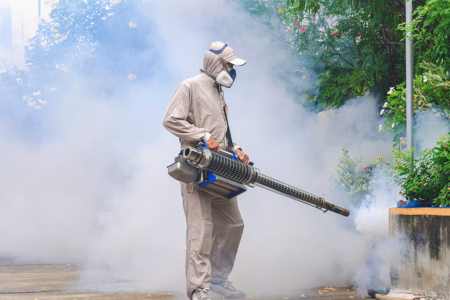
Even with vaccines, controlling dengue requires addressing the root cause—the mosquito vector. The Aedes mosquito breeds in small water collections found in urban areas, such as containers, tires, and construction sites.
Efforts to eliminate breeding grounds often face challenges due to poor sanitation, rapid urban growth, and lack of public awareness.
Climate change is also expanding the habitat range of mosquitoes, increasing the risk of outbreaks in previously unaffected areas.
Diagnostic and Surveillance Gaps
Early detection and surveillance are critical for managing dengue outbreaks. However, in many regions, limited healthcare infrastructure and diagnostic capacity hinder timely identification of cases.
Underreporting and delayed response can allow outbreaks to spread rapidly, complicating control efforts.
Public Awareness and Behavior
Community participation plays a crucial role in preventing dengue. Simple measures like removing stagnant water, using mosquito repellents, and installing screens can significantly reduce risk.
However, maintaining consistent public engagement is challenging, particularly in densely populated urban areas.
The Role of Research
Ongoing research aims to develop safer and more effective vaccines that can be widely used regardless of prior infection status. Scientists are also exploring new approaches, such as genetically modified mosquitoes and antiviral treatments.
While progress is being made, experts caution that no single solution will be sufficient to eliminate dengue.
Integrated Approach Needed
Public health experts emphasize that combating Dengue Fever requires a multi-pronged strategy. This includes vaccination, vector control, improved sanitation, public education, and robust healthcare systems.
Governments and international organizations are increasingly focusing on integrated programmes to address these challenges.
Conclusion
Despite scientific advancements, Dengue Fever remains difficult to control due to its complex biology, multiple virus strains, and environmental factors. Vaccines are a promising tool, but they are not a complete solution.
A comprehensive and sustained effort involving communities, governments, and researchers is essential to reduce the burden of this growing disease.
Summary
Dengue remains hard to control due to multiple virus strains, vaccine limitations, mosquito spread, and environmental factors, requiring combined efforts in vaccination, vector control, and public awareness to reduce cases.