

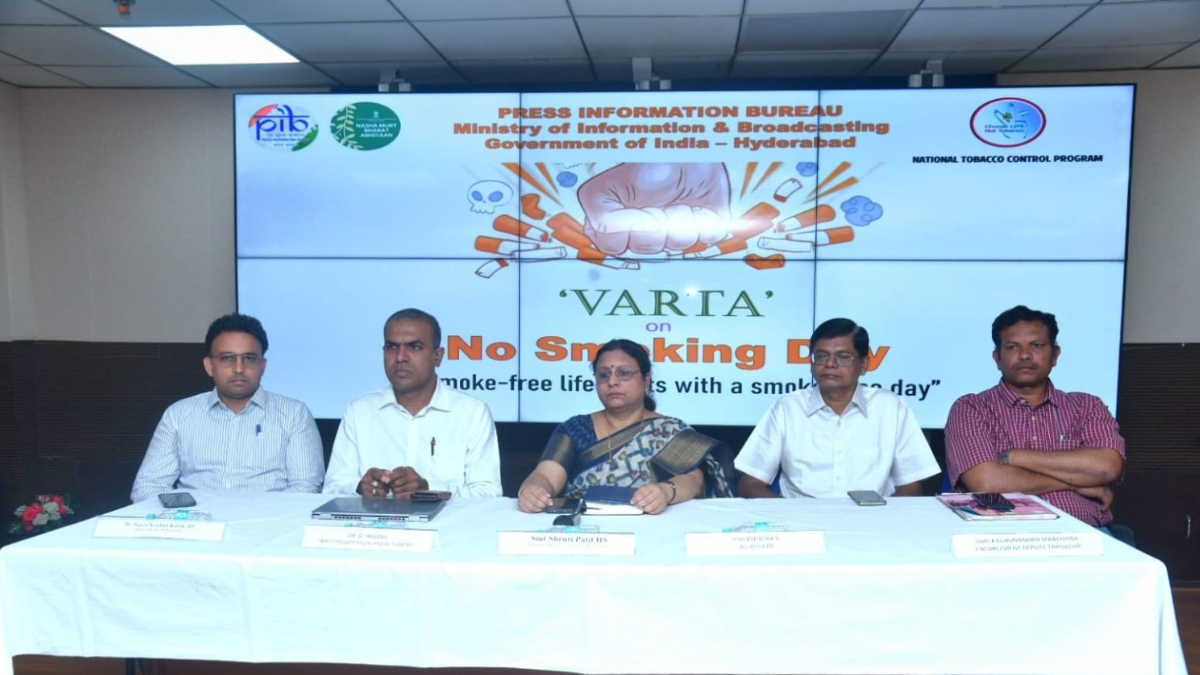
12 March 2026 Punjab Khabarnama Bureau : On the occasion of No Smoking Day, the Press Information Bureau Hyderabad organized a special media interaction titled “VARTA” to raise awareness about the harmful effects of tobacco consumption and encourage citizens to adopt a tobacco-free lifestyle. The event brought together health experts, journalists, and public officials to discuss the growing public health concerns associated with smoking and other forms of tobacco use.
The program was held at the Hyderabad regional office of the Press Information Bureau and was attended by representatives from leading media organizations. Officials used the platform to highlight the importance of spreading accurate information about the dangers of tobacco and the role media can play in shaping public attitudes toward healthier lifestyles.
Promoting Awareness Through Media
The “VARTA” initiative is designed as an interactive communication platform that connects government departments, experts, and journalists to discuss important public issues. During the event, speakers emphasized that media organizations have a critical role in informing citizens about the risks of tobacco use and encouraging behavioral change.
Health professionals explained that smoking remains one of the leading causes of preventable diseases worldwide. They highlighted that tobacco consumption contributes to a wide range of health conditions including heart disease, respiratory illnesses, and several types of cancer. According to medical experts, many of these illnesses can be prevented if individuals avoid tobacco products or quit smoking early.
Participants also discussed the increasing concern surrounding the use of smokeless tobacco products, particularly in developing countries. Experts noted that many people underestimate the risks of products such as chewing tobacco, which can also lead to serious health complications.
Observing No Smoking Day
No Smoking Day is observed annually to encourage smokers to quit and to educate people about the health and social consequences of tobacco use. During the interaction, speakers urged individuals to use the day as an opportunity to make a positive change in their lives.
Officials emphasized that quitting smoking is one of the most important steps a person can take to improve their health. They noted that within weeks of quitting, the body begins to recover, with improvements in lung function and reduced risk of heart disease over time.
Public health experts also highlighted the dangers of second-hand smoke, which can affect non-smokers, including children and family members living in the same household. They stressed the need for smoke-free homes and workplaces to protect vulnerable groups from exposure.
Government Initiatives Against Tobacco
During the discussion, speakers outlined various measures taken by the government to reduce tobacco consumption. These include awareness campaigns, health warnings on tobacco packaging, restrictions on advertising, and public smoking bans in many places.
Officials said that government agencies are working closely with healthcare institutions and civil society organizations to strengthen anti-tobacco initiatives. Educational programs in schools and colleges have also been introduced to inform young people about the dangers of tobacco use and discourage them from adopting harmful habits.
Experts at the event stressed that preventing tobacco addiction among youth should be a top priority. Many smokers begin using tobacco at a young age, and early intervention can significantly reduce long-term health risks.
Encouraging Support for Quitting
One of the key messages shared during the event was that quitting tobacco is challenging but achievable with proper support. Medical professionals recommended counseling services, nicotine replacement therapies, and community support programs to help individuals overcome addiction.
Participants also discussed the psychological aspects of tobacco dependency and the importance of creating supportive environments for people trying to quit. Family members, colleagues, and community leaders can play an important role in encouraging smokers to take the first step toward quitting.
Media representatives at the event expressed their commitment to highlighting stories and campaigns that promote healthier living. They acknowledged that responsible reporting can contribute to public awareness and motivate individuals to reconsider harmful habits.
A Collective Responsibility
Concluding the session, officials emphasized that building a tobacco-free society requires collective efforts from government agencies, healthcare professionals, the media, and the public. Awareness initiatives like the “VARTA” interaction aim to strengthen communication between stakeholders and ensure that accurate health information reaches communities across the country.
Speakers encouraged citizens to use No Smoking Day as a reminder to prioritize their health and support others in their journey toward quitting tobacco. By promoting informed choices and encouraging healthier lifestyles, such initiatives hope to reduce the long-term health burden associated with tobacco consumption.
The event ended with a call for continued collaboration between media organizations and health authorities to spread awareness and support national efforts to create a healthier, tobacco-free future.
Summary
PIB Hyderabad organized a “VARTA” media interaction on No Smoking Day to raise awareness about tobacco dangers, encourage quitting, and highlight the role of media in promoting healthier, tobacco-free lifestyles.