

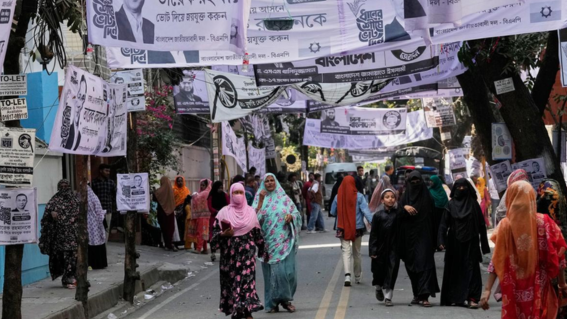
13 February 2026 Punjab Khabarnama Bureau : In a historic political moment, voters across Bangladesh have overwhelmingly endorsed a wide-ranging package of democratic reforms in a nationwide referendum, signaling strong public demand for political accountability, institutional transparency, and stronger democratic safeguards.
The referendum, held amid tight security and high voter participation, asked citizens to vote on a series of constitutional and electoral reforms aimed at reshaping the country’s governance framework. According to preliminary results released by the Bangladesh Election Commission, a decisive majority supported the reform agenda, marking one of the most significant democratic exercises in the nation’s history.
Election officials reported brisk turnout in both urban and rural regions, reflecting strong public engagement. Long queues were seen at polling stations from early morning, with voters describing the referendum as a rare opportunity to directly influence the political future of the country.
At the heart of the reforms are measures designed to strengthen parliamentary oversight, enhance the independence of key institutions, and ensure fairer electoral competition. Proposals include limits on executive authority, greater transparency in political financing, judicial safeguards against political interference, and reforms to the caretaker governance system during elections.
Political analysts say the referendum outcome reflects growing public frustration with political polarization, allegations of corruption, and concerns about democratic backsliding. Many voters expressed hope that the reforms would help restore trust in public institutions and reduce the concentration of power.
“This vote shows that people want a system where leaders are accountable and institutions are stronger than individuals,” said a senior political commentator. “It is a clear message from citizens that democratic principles must be protected.”
The government welcomed the results, calling the referendum a “victory for the people.” In an official statement, authorities said they would move swiftly to implement the approved reforms through constitutional amendments and legislative changes. Lawmakers are expected to debate the implementation framework in the coming weeks.
Opposition parties, while broadly supportive of the reform agenda, urged the government to ensure that the changes are implemented in both letter and spirit. Some opposition leaders cautioned that institutional reforms must be accompanied by genuine political will to be effective.
Civil society organizations and rights groups praised the peaceful conduct of the referendum and the high level of public participation. Several groups described the vote as a positive step toward democratic renewal, while emphasizing the importance of continued vigilance.
“This referendum has given people a voice,” said a representative of a leading civil rights organization. “The real test will be whether the reforms lead to meaningful change on the ground.”
International observers monitoring the process noted that polling was largely orderly and transparent. While they stopped short of offering a final assessment, early observations highlighted improvements in voter access and election management compared to previous national exercises.
Economists also weighed in, suggesting that stronger democratic institutions could improve investor confidence and policy stability. “Predictable governance and rule of law are crucial for economic growth,” said a Dhaka-based analyst. “Reforms that enhance transparency can have long-term economic benefits.”
However, challenges remain. Implementing sweeping reforms will require consensus-building in parliament, administrative capacity, and sustained political commitment. Critics warn that without effective enforcement mechanisms, the reforms risk remaining symbolic.
In rural areas, voters voiced cautious optimism. Many said they hoped the changes would lead to better local governance, fair access to public services, and reduced political violence. Young voters, in particular, saw the referendum as a step toward a more inclusive political system.
The referendum comes at a time when democratic governance is under strain in many parts of the world. Observers note that Bangladesh’s vote stands out as a rare instance of direct public endorsement for structural democratic reform through a peaceful, constitutional process.
As the country prepares for the next phase, attention will turn to how quickly and effectively the approved measures are enacted. Legal experts expect a phased approach, with priority given to electoral and judicial reforms.
For many citizens, the referendum represents more than a policy decision—it symbolizes a renewed assertion of popular sovereignty. “We voted not just for laws, but for our future,” said a voter after casting her ballot.
With a clear mandate from the electorate, Bangladesh now faces a defining moment. Whether the referendum becomes a turning point in strengthening democracy will depend on how faithfully the reforms are translated into practice in the months and years ahead.
Summary
Bangladeshi voters have overwhelmingly approved sweeping democratic reforms in a national referendum, signaling strong public demand for accountability, transparent governance, and stronger democratic institutions across the country.