

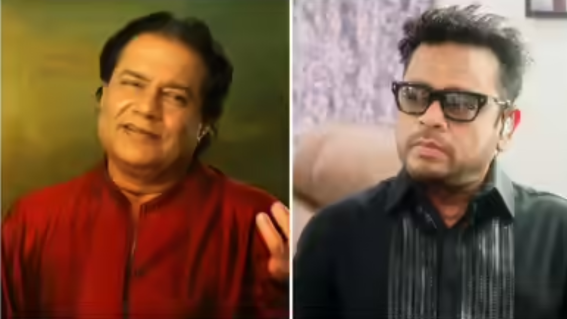
21 January 2026 Punjab Khabarnama Bureau : A fresh controversy has emerged in the entertainment and cultural space after renowned bhajan singer Anup Jalota advised Oscar-winning composer A.R. Rahman to “convert back to Hinduism and test his luck,” following Rahman’s recent remark that some critics have described as “communal.” The comment has sparked intense debate across social media platforms, with reactions ranging from support and criticism to concern over the tone of public discourse around religion and identity.
The statement, made during a public interaction, quickly went viral and has since drawn widespread attention from fans, cultural commentators, and members of the music fraternity. While Jalota is known for his spiritual music and religious devotion, his comment has reignited conversations about the boundaries between personal belief, freedom of expression, and public responsibility.
What Triggered the Controversy
The controversy began after A.R. Rahman made a remark during a recent discussion that some individuals and groups labeled as “communal” or sensitive. While Rahman has not directly responded to those allegations, his comment generated online debate and polarized opinions.
Amid this backdrop, Anup Jalota’s response added another layer to the discussion. His suggestion that Rahman should consider converting back to Hinduism was seen by some as a personal opinion rooted in faith, while others interpreted it as an inappropriate comment that crossed personal boundaries.
Public Reaction Divided
Social media platforms were flooded with reactions soon after the clip of Jalota’s statement circulated widely. Supporters of Jalota argued that he was expressing a personal belief rooted in spirituality and tradition. They claimed that his comment was not intended to offend but reflected his worldview.
On the other hand, critics strongly condemned the statement, calling it intrusive and unnecessary. Many users pointed out that religious identity is a deeply personal matter and should not be subjected to public pressure or commentary. Several commentators also stressed that an individual’s success, creativity, and legacy should not be linked to their faith.
The debate quickly expanded beyond the two personalities involved, turning into a broader conversation about tolerance, freedom of belief, and the role of public figures in shaping social narratives.
A.R. Rahman’s Legacy in Focus
A.R. Rahman remains one of India’s most celebrated musicians, with a career spanning decades and international recognition, including multiple global awards. Known for his humility and spiritual outlook, Rahman has often spoken about harmony, peace, and unity across cultures.
Many fans came to his defense, highlighting his consistent message of inclusivity through music. They argued that reducing his identity or achievements to religious discussions undermines his contribution to art and society.
Several musicians and artists also voiced concern over the direction of the debate, suggesting that artistic contributions should be respected independently of personal beliefs.
The Larger Conversation on Religion and Expression
The incident has reopened a familiar yet complex conversation in Indian society: where does freedom of expression end and where does sensitivity begin? Public figures often command influence, and their words carry weight far beyond personal opinion.
Cultural analysts note that comments involving religion, identity, and conversion are especially sensitive in a diverse society. While individuals have the right to express beliefs, they also bear responsibility to consider how such statements may affect broader harmony.
This episode underscores how quickly public discourse can become polarized in the age of social media, where nuanced discussions are often reduced to viral clips and reactive commentary.
Silence from Both Camps
As of now, A.R. Rahman has not issued a public response to Jalota’s comment. Known for staying away from controversies, Rahman has historically chosen to let his work speak louder than words.
Anup Jalota, too, has not expanded on his statement since the initial remarks went viral. Observers believe that the silence from both sides may be an attempt to prevent further escalation.
Experts Call for Sensitivity
Several social commentators and public intellectuals have urged greater sensitivity when discussing matters of faith. They argue that religion should remain a personal journey rather than a subject of public debate or suggestion.
Mental health professionals have also weighed in, noting that public pressure regarding identity can have emotional consequences, especially when directed at individuals who are constantly under public scrutiny.
Impact on Public Discourse
While the controversy may fade from headlines in time, it has left behind an important question about the tone of public conversation. Many believe that the incident should serve as a reminder of the need for respect, restraint, and empathy in public dialogue.
In a country as diverse as India, unity is often sustained through mutual respect across beliefs, languages, and cultures. Events like these highlight how delicate that balance can be.
Summary
Anup Jalota’s remark advising A.R. Rahman to convert back to Hinduism sparked controversy online, triggering divided reactions over religious sensitivity, freedom of expression, and the appropriateness of public commentary on personal faith.