

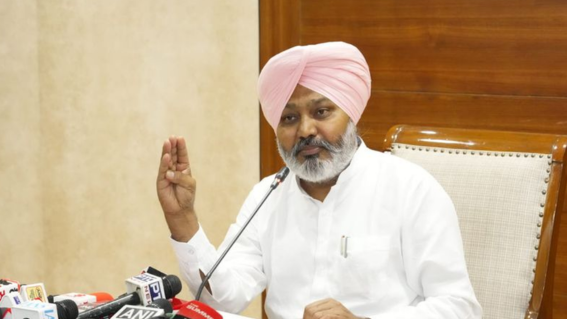
20 January 2026 Punjab Khabarnama Bureau : The Punjab government has taken a significant U-turn on the sensitive issue surrounding the Rasokhana Shri Nabh Kanwal Raja Sahib shrine in Banga, just days after Chief Minister Bhagwant Mann claimed that a sacred saroop was missing from the revered religious site. The reversal has intensified political debate and triggered fresh questions about governance, accountability, and the handling of religious matters in the state.
The controversy began when CM Mann publicly suggested that a sacred saroop linked to the shrine had gone missing, a statement that quickly created unease among devotees and religious organisations. Given the emotional and spiritual importance attached to such matters, the claim sparked widespread concern across Punjab, with religious leaders demanding clarity and political parties seizing upon the issue to corner the government.
Government’s Sudden Change in Stand
Days after the initial claim, the state government issued a clarification, stating that there was no confirmed evidence of a missing saroop and that the matter had been misunderstood or miscommunicated. Officials now say that records are being reviewed and that the shrine’s management has been asked to cooperate with authorities to ensure complete transparency.
This reversal has been described by critics as an embarrassing climbdown. Opposition parties argue that such sensitive issues should be handled with extreme care and only after thorough verification. They accuse the government of making premature statements that risk disturbing communal harmony and hurting religious sentiments.
Supporters of the government, however, contend that the Chief Minister merely raised a concern based on preliminary inputs and that correcting the record demonstrates accountability rather than weakness.
Political Fallout Intensifies
The incident has quickly turned into a political flashpoint. Opposition leaders have accused the ruling administration of using religious issues for political mileage, while also questioning the internal coordination within the government. Several leaders have demanded a clear explanation of how such a serious claim was made without proper confirmation.
Political analysts believe that the U-turn reflects deeper administrative challenges. “When it comes to religious matters in Punjab, every word spoken by a political leader carries enormous weight. A lack of consistency can damage credibility and erode public trust,” said a senior observer of Punjab politics.
The controversy has also reopened discussions about the relationship between politics and religious institutions in the state, a topic that has long shaped Punjab’s political landscape.
Devotees Seek Clarity, Not Politics
Amid the political sparring, many devotees associated with the shrine have expressed concern over the uncertainty created by conflicting statements. For them, the issue is not about politics but about respect for faith and the dignity of the religious site.
Members of the shrine management committee have called for calm, stating that the sanctity of the place must be preserved and that any investigation should be conducted respectfully. They have urged both the government and political parties to refrain from making speculative statements that could inflame emotions.
Community leaders have also appealed to the public to avoid spreading rumours, emphasizing that misinformation on sensitive issues can quickly escalate tensions.
Administrative Questions Raised
Beyond politics and religion, the episode has raised serious administrative questions. How was the information regarding the alleged missing saroop gathered? Why was it made public before being fully verified? And who is accountable for the confusion that followed?
Governance experts point out that such situations underline the importance of institutional processes. Sensitive matters require careful documentation, internal review, and discreet handling. Public announcements, they argue, should be based on confirmed facts, especially when they relate to faith and heritage.
The government has now indicated that it will review internal communication mechanisms to ensure that similar situations do not arise in the future. Officials have suggested that a formal inquiry into the events leading to the controversy may be considered.
Impact on Public Perception
For many citizens, the episode has been unsettling. While some view the government’s clarification as a responsible step, others feel that the initial statement should never have been made without full certainty. Trust, once shaken, can be difficult to rebuild, particularly when the issue involves religious sentiments.
Social media reactions have been mixed. Some users praised the government for correcting its stance, while others criticized what they described as confusion and poor judgment. The debate has highlighted how rapidly such issues can escalate in the digital age.
A Lesson in Responsibility
The controversy surrounding the Rasokhana Shri Nabh Kanwal Raja Sahib shrine serves as a reminder of the delicate balance leaders must maintain when addressing matters of faith. Words spoken from positions of power carry consequences, and any misstep can have wide-ranging implications.
As the dust begins to settle, many observers believe that the real takeaway from this episode should be the need for caution, verification, and sensitivity. Political gains, they argue, should never come at the cost of public trust or religious harmony.
For now, the Punjab government faces the challenge of restoring confidence—both among devotees and the broader public—while ensuring that such controversies are handled with greater care in the future.
Summary
Punjab government reversed its stand on the Banga shrine controversy after CM Mann’s claim of a missing saroop sparked outrage, triggering political backlash, public confusion, and renewed debate over responsibility in handling sensitive religious matters.