

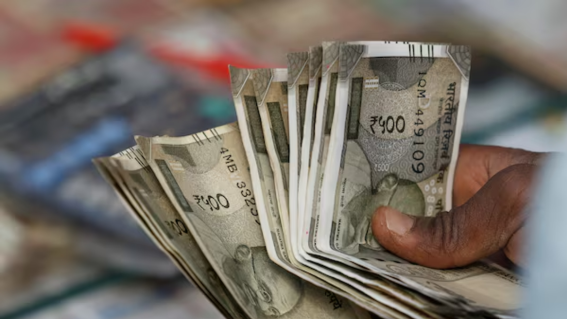
16 January 2026 Punjab Khabarnama Bureau : The Indian rupee traded under pressure on Tuesday, weighed down by strong corporate dollar demand and increased activity in the offshore non-deliverable forward (NDF) market, which limited any meaningful recovery in the domestic currency. Despite supportive cues from broader emerging markets, the rupee struggled to gain momentum as demand for dollars remained elevated throughout the trading session.
Currency dealers noted that large importers and corporate entities were actively purchasing dollars to meet upcoming payment obligations. This persistent demand created downward pressure on the rupee, preventing it from strengthening even when the U.S. dollar showed signs of consolidation globally. Companies across sectors such as energy, infrastructure, and technology were reportedly seen accumulating dollars, adding to intraday volatility.
Another significant factor influencing the rupee was the NDF market, an offshore platform where foreign investors trade rupee contracts without physical delivery. Movements in the NDF market often impact domestic currency sentiment, and traders observed that elevated NDF premiums encouraged speculative dollar buying, further weakening the rupee. The impact of these offshore trades spilled into onshore markets, amplifying pressure on the currency.
Market participants also pointed out that importer hedging activity has picked up in recent sessions due to concerns over global uncertainties. With geopolitical tensions persisting and commodity prices showing intermittent spikes, many corporates prefer to secure their dollar exposure in advance. This defensive approach has increased dollar demand and kept the rupee on the back foot.
At the same time, the inflow of foreign capital into Indian equities, although improving, has not been strong enough to offset the heavy dollar demand from corporates. While select foreign institutional investors have shown renewed interest in Indian markets, particularly in technology and banking stocks, currency traders believe that portfolio inflows remain uneven and insufficient to provide sustained support to the rupee.
The performance of the U.S. dollar in global markets has also played a role. Although the dollar index has shown some stability, expectations around U.S. interest rates continue to influence currency movements worldwide. Investors remain cautious ahead of key economic data releases from the United States, which could shape the future policy stance of the Federal Reserve. Any indication of prolonged higher interest rates tends to support the dollar and put pressure on emerging market currencies, including the rupee.
Crude oil prices are another key factor affecting the rupee’s trajectory. India, being a major importer of crude, faces higher dollar outflows when oil prices rise. Traders noted that even moderate increases in crude prices often trigger precautionary dollar buying by oil marketing companies, which further burdens the local currency. While oil prices have not seen extreme volatility recently, the underlying risk continues to influence sentiment in the foreign exchange market.
Despite the pressure, analysts believe that the rupee’s downside may be somewhat cushioned by the Reserve Bank of India’s active monitoring. The central bank is widely expected to intervene in the market if volatility becomes excessive or if the currency moves too sharply in either direction. India’s strong foreign exchange reserves also provide confidence that the RBI has sufficient firepower to manage abrupt fluctuations.
Exporters, meanwhile, have been selectively selling dollars at higher levels, which has offered intermittent support to the rupee. However, their participation has been limited compared to the scale of importer and corporate demand. As a result, the overall balance in the currency market remains tilted in favor of the dollar.
Looking ahead, currency experts believe the rupee’s movement will be guided by several key factors, including global risk sentiment, crude oil prices, foreign fund flows, and upcoming economic data. Domestic indicators such as inflation trends, trade deficit figures, and economic growth projections will also play an important role in shaping market expectations.
In the near term, traders expect the rupee to trade within a range, with intermittent bouts of volatility driven by external developments. While long-term fundamentals of the Indian economy remain strong, short-term pressures from dollar demand and offshore market dynamics are likely to keep the currency under check.
Overall, the session highlighted the complex interplay of global and domestic forces affecting the rupee. With corporate dollar buying showing no signs of easing and NDF-related activity influencing sentiment, the currency may continue to face resistance unless stronger inflows or supportive global cues emerge.
Summary
The rupee weakened as strong corporate dollar demand and heightened NDF market activity weighed on sentiment, offsetting supportive global cues and limiting recovery despite stable fundamentals and RBI’s continued market monitoring.