

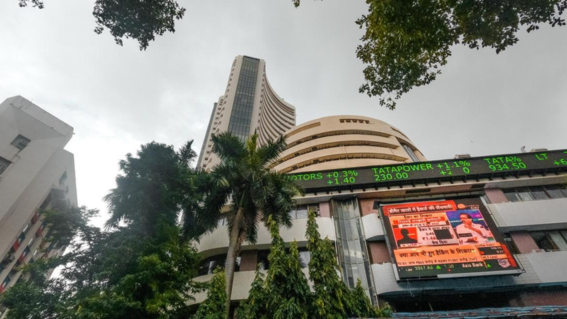
13 January 2026 Punjab Khabarnama Bureau : Indian equity markets ended lower after giving up early gains, as persistent foreign fund outflows and heavy selling in frontline blue-chip stocks dampened investor sentiment. The benchmark indices opened on a positive note, tracking firm global cues, but failed to sustain momentum amid growing caution over overseas capital flows and profit booking in key sectors.
Market participants said that while domestic fundamentals remain supportive, the near-term outlook is being clouded by external factors, particularly the continued withdrawal of funds by foreign institutional investors (FIIs). This trend has added pressure on large-cap stocks, which typically bear the brunt of global portfolio reallocations.
Early Optimism Fades
The trading session began with optimism as investors reacted positively to supportive signals from Asian markets and expectations of stability in interest rates. Banking, IT, and auto stocks led the early rally, pushing key indices into the green during morning trade.
However, the rally proved short-lived. As the session progressed, selling pressure emerged in heavyweight stocks, dragging the benchmarks lower. By afternoon trade, the indices had erased all gains and slipped into negative territory, reflecting a shift in sentiment from optimism to caution.
Traders said the market’s inability to hold on to gains highlights the fragile nature of current investor confidence.
Foreign Fund Outflows Continue
One of the main reasons behind the market’s weakness has been sustained selling by foreign investors. Over recent sessions, overseas funds have been net sellers in Indian equities, driven by concerns over global interest rates, currency fluctuations, and uncertainty in international markets.
Analysts explained that higher bond yields in developed economies have made debt instruments more attractive compared to emerging market equities. This has prompted foreign investors to rebalance their portfolios, resulting in capital outflows from markets like India.
The impact of this selling is particularly visible in large-cap stocks, where foreign ownership remains significant. As FIIs trim their exposure, heavyweights across banking, technology, and energy sectors have come under pressure.
Blue-Chip Stocks Drag Markets Lower
The decline in the indices was largely led by selling in blue-chip stocks. Shares of major banking, financial services, IT, and energy companies witnessed profit booking after recent gains.
Banking stocks, which had rallied in previous sessions on expectations of credit growth and stable asset quality, saw investors locking in profits. Similarly, IT stocks faced pressure due to lingering concerns over global demand and cautious corporate spending.
Heavyweights in sectors such as oil and gas, metals, and FMCG also contributed to the decline, underscoring the broad-based nature of the selling.
Market experts pointed out that when large-cap stocks weaken, they tend to drag the entire market lower due to their significant weight in the indices.
Midcaps and Smallcaps Show Resilience
While benchmark indices traded lower, the broader market showed mixed trends. Several midcap and smallcap stocks continued to attract investor interest, supported by strong earnings potential and company-specific developments.
Retail investors remain active in these segments, focusing on growth-oriented companies with long-term prospects. This has helped limit the downside in broader indices, even as large-cap stocks struggled.
However, analysts cautioned that midcap and smallcap valuations have risen sharply in recent months, and investors should remain selective while maintaining a long-term perspective.
Global Cues Remain Mixed
Global market trends also played a role in shaping investor sentiment. While some Asian markets traded higher, uncertainty over global economic growth, geopolitical tensions, and interest rate trajectories kept investors on edge.
Concerns over the pace of rate cuts by major central banks have led to volatility in global financial markets. Investors are closely monitoring economic data from major economies for clues on inflation trends and future monetary policy decisions.
The strengthening of the US dollar has also put pressure on emerging market currencies, including the rupee, which indirectly affects foreign investment flows.
Investor Strategy Turning Cautious
Market strategists believe that the current phase reflects consolidation after a strong rally in recent months. They suggest that volatility is likely to continue in the short term, especially as global factors remain uncertain.
Investors are increasingly adopting a cautious approach, preferring to book profits at higher levels while waiting for clarity on global cues and foreign fund flows. At the same time, long-term investors continue to view market corrections as opportunities to accumulate quality stocks.
Experts advise focusing on fundamentally strong companies, knowing that short-term fluctuations are part of market cycles.
Outlook for the Coming Sessions
Looking ahead, market direction will depend largely on foreign investor behavior, global market trends, and upcoming economic data. Any easing in foreign fund outflows could provide support to the indices, while continued selling may keep markets under pressure.
Domestic factors such as corporate earnings, inflation data, and policy signals will also influence sentiment. If earnings remain strong and economic indicators stay positive, markets could regain stability despite global uncertainties.
For now, traders expect the market to remain range-bound with heightened volatility.
Conclusion
The decline in the stock market after an early rally highlights the fragile balance between optimism and caution. Persistent foreign fund outflows and selling in blue-chip stocks have overshadowed positive domestic cues, leading to a subdued close for benchmark indices.
While short-term volatility may continue, India’s long-term growth story remains intact. Investors are advised to stay disciplined, avoid panic selling, and focus on quality investments with a long-term horizon.
Summary
Indian stock markets erased early gains and traded lower as foreign investors continued selling and blue-chip stocks faced pressure. Persistent outflows and cautious global sentiment weighed on investor confidence.