

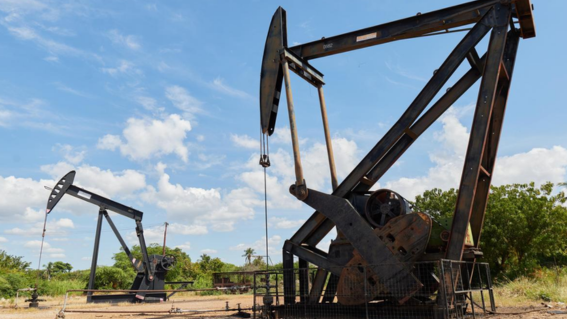
8 January 2026 Punjab Khabarnama Bureau : The United States has unveiled a far-reaching plan to exercise long-term control over Venezuela’s oil sales, a move that could significantly reshape global energy dynamics and redefine Washington’s relationship with the oil-rich South American nation. Senior U.S. officials have indicated that the arrangement is intended to be “indefinite,” underscoring a strategic shift in how the U.S. approaches Venezuela’s vast but long-troubled energy sector.
At the core of the plan is U.S. oversight of Venezuelan crude exports and the revenues generated from them. Officials say the strategy will initially focus on millions of barrels of Venezuelan oil currently held in storage, before expanding to include future production. Under this framework, the U.S. would manage the marketing and sale of Venezuelan crude, with proceeds placed under controlled mechanisms rather than flowing directly to Venezuela’s state institutions.
Washington has framed the move as a pragmatic solution aimed at stabilising Venezuela’s oil industry, which has suffered years of decline due to sanctions, underinvestment, operational challenges, and political turmoil. U.S. policymakers argue that by controlling sales and revenue streams, they can ensure transparency, prevent misuse of funds, and gradually encourage reforms within the Venezuelan system.
Energy officials have highlighted that U.S. refineries, particularly those equipped to process heavy crude, are well suited to handle Venezuelan oil. This technical compatibility is expected to make the transition smoother while also strengthening energy ties between the two countries. The plan also includes provisions for supplying diluents and technical support to help Venezuela move its extra-heavy crude more efficiently.
From the U.S. perspective, the arrangement offers multiple advantages. It secures access to a steady supply of oil at a time when global energy markets remain volatile, while also giving Washington leverage in shaping Venezuela’s economic and political future. Officials insist the approach is not about permanent appropriation, but about responsible management during a prolonged transition period.
However, the announcement has sparked intense debate and criticism. Opponents argue that indefinite control over another country’s oil sales raises serious questions about sovereignty and international norms. Critics within the U.S. have described the plan as excessive, warning that it could be perceived as exploiting Venezuela’s resources under the guise of stability and reform.
In Venezuela, reactions have been mixed. Some economic analysts believe the plan could help revive oil production, restore investor confidence, and generate much-needed revenue for a country facing deep economic hardship. They note that Venezuela’s oil output has fallen dramatically over the past decade, and external management could bring operational discipline and access to global markets.
Others, however, view the plan as a loss of national control over a critical resource. For a country whose identity and economy are closely tied to oil, the idea of foreign oversight “indefinitely” has triggered concerns about long-term dependency and reduced autonomy. Political groups have warned that the arrangement could deepen public resentment and complicate Venezuela’s internal recovery.
The global implications of the U.S. move are also significant. Redirecting Venezuelan crude away from traditional buyers could alter supply patterns, particularly in Asia. Analysts suggest that increased Venezuelan oil entering Western markets may influence prices, especially if production scales up over time. At the same time, uncertainty around the duration and structure of U.S. control could keep markets cautious.
Energy experts note that while Venezuela holds one of the world’s largest proven oil reserves, reviving production will not be easy. Years of neglect have left infrastructure in poor condition, and skilled manpower shortages remain a challenge. Even with U.S. oversight, meaningful increases in output may take time and substantial investment.
Diplomatically, the plan signals a tougher, more interventionist U.S. stance on resource management in politically unstable regions. Supporters argue it reflects realism in a world where energy security and geopolitics are deeply intertwined. Detractors warn it could set a precedent that other powerful nations may follow, increasing tensions over natural resources.
The U.S. government has emphasised that the arrangement will be reviewed periodically, though officials have avoided setting a clear end date. This ambiguity has added to the controversy, with observers questioning what conditions would be required for Venezuela to regain full control over its oil sales.
As discussions continue, the future of Venezuela’s oil sector appears poised at a crossroads. The U.S. plan could either mark the beginning of a slow recovery under strict oversight or deepen debates over sovereignty and foreign control. Much will depend on how transparently the system is implemented and whether it delivers tangible benefits to ordinary Venezuelans.
What remains clear is that the U.S. decision has moved Venezuela’s oil back to the centre of global energy and political conversations, with consequences that will be felt well beyond Latin America.
Summary
The United States plans to control Venezuela’s oil sales indefinitely, managing exports and revenues to stabilise production and exert influence, sparking global debate over energy security, sovereignty, and long-term geopolitical impact.