

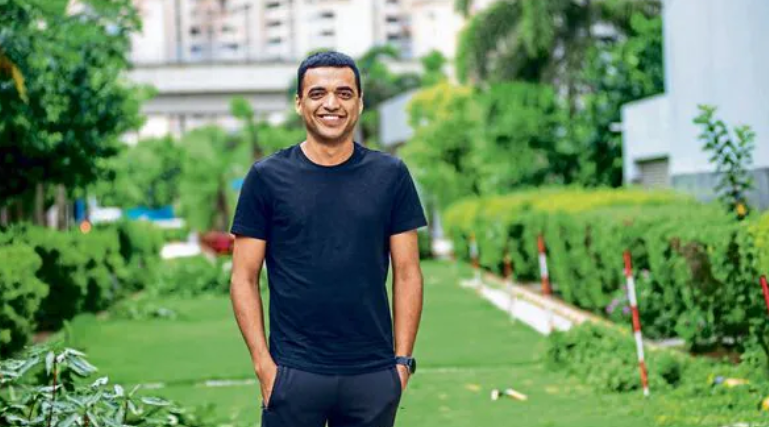
2 January 2026 Punjab Khabarnama Bureau :Zomato co-founder and CEO Deepinder Goyal has stepped in to defend the company’s delivery partners following growing criticism over alleged traffic rule violations by food delivery riders. His remarks have reignited a broader debate around road safety, work pressure in the gig economy, and the public perception of app-based delivery workers in India.
The controversy emerged after several social media users and local authorities highlighted instances of delivery riders allegedly jumping traffic signals, overspeeding, or riding on the wrong side of the road to meet tight delivery deadlines. Critics argued that the fast-paced delivery model promoted by food and quick-commerce platforms indirectly encourages unsafe behaviour on already congested Indian roads.
Responding to these allegations, Goyal offered a wider social perspective rather than singling out delivery workers. He said that blaming delivery partners alone for traffic violations ignores a deeper issue in Indian urban life. According to him, Indians as a society are often in a rush, whether they are office-goers, private commuters, or commercial drivers. Delivery riders, he suggested, stand out simply because they wear uniforms and branded bags, making them more visible and easier to blame.
Goyal emphasised that traffic violations are not exclusive to gig workers. “Everyone on the road is trying to get somewhere quickly,” he noted, adding that delivery partners often become soft targets for public anger even though their actions reflect a larger, systemic problem of poor traffic discipline and infrastructure challenges.
Pressure of the Gig Economy
The debate has also drawn attention to the working conditions of delivery partners. Many riders operate under incentive-based systems where earnings depend on the number of deliveries completed within a fixed time. Worker groups argue that such models unintentionally push riders to take risks, especially during peak hours, festivals, or high-demand days.
Labour unions and gig-worker collectives have recently staged protests in several cities, demanding better pay structures, realistic delivery timelines, and stronger safety measures. They claim that while platforms publicly emphasise safety, the internal algorithms reward speed, creating constant pressure to deliver faster.
Goyal, however, rejected the idea that the system is fundamentally exploitative. He stated that millions of Indians continue to choose gig work because it offers flexibility, income opportunities, and low entry barriers, especially for those who may not have access to formal employment. He argued that if the system were deeply unfair, such large numbers of people would not voluntarily participate in it every day.
Record Deliveries and Workforce Commitment
To support his argument, Goyal pointed to recent record-breaking delivery volumes achieved by Zomato and its quick-commerce arm during peak demand periods. According to him, delivery partners played a crucial role in meeting unprecedented order volumes, even amid calls for strikes by some worker groups.
He described delivery partners as resilient and hardworking individuals who keep essential services running, particularly during festivals, holidays, and late-night hours when most people prefer to stay indoors. In his view, the focus should be on acknowledging their contribution rather than painting them as reckless riders.
At the same time, Goyal maintained that Zomato does not encourage traffic violations and regularly communicates safety guidelines to its delivery workforce. He reiterated that riders are expected to follow traffic laws, wear helmets, and prioritise their own safety over speed.
Regulatory Scrutiny and Safety Concerns
Despite these assurances, regulatory scrutiny has increased in several cities. Traffic authorities have raised concerns about a noticeable rise in violations involving delivery riders, prompting notices and discussions with major delivery platforms. Officials argue that while traffic indiscipline is widespread, platforms must take responsibility for the behaviour of workers operating under their brand.
Road safety experts also stress that Indian cities lack adequate infrastructure for two-wheelers, including safe lanes and predictable traffic flow. Combined with congestion, poor road design, and aggressive driving culture, delivery riders often face high-risk conditions even when they attempt to follow the rules.
Experts suggest that the solution lies not in blame but in collaboration between platforms, authorities, and urban planners. Proposals include realistic delivery time estimates, safety-linked incentives, better training, and public awareness campaigns aimed at improving overall traffic discipline.
Mixed Public Reactions
Public reaction to Goyal’s comments has been divided. Supporters believe he rightly defended delivery partners who are frequently criticised despite being part of a larger social problem. They argue that holding gig workers to a higher standard than other road users is unfair.
Critics, however, say the comments risk downplaying genuine safety concerns and shifting attention away from platform accountability. They believe delivery companies should take stronger steps to ensure that speed-based incentives do not conflict with road safety.
The Road Ahead
As India’s gig economy continues to expand, the debate over delivery speed, safety, and worker welfare is unlikely to fade. Goyal’s remarks underline the complexity of the issue — one that sits at the intersection of urban traffic culture, economic opportunity, and technological disruption.
While delivery partners remain an essential part of modern urban life, balancing efficiency with safety will be critical for platforms like Zomato. Whether through policy changes, regulatory intervention, or improved infrastructure, the challenge ahead is to ensure that convenience for consumers does not come at the cost of human safety on the roads.