

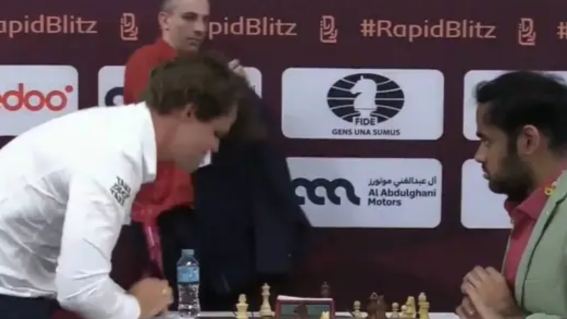
30 December 2025 Punjab Khabarnama Bureau : Five-time world champion Magnus Carlsen is known for his intensity at the chessboard, but rarely does that intensity spill into visible frustration. At the World Blitz Championship, however, the Norwegian superstar’s emotions resurfaced dramatically as his now-famous table-bang returned following a painful defeat to India’s rising star Arjun Erigaisi.
The incident, which quickly went viral among chess fans, occurred moments after Carlsen lost a tense blitz encounter to Erigaisi. As the result became clear, Carlsen forcefully struck the table, a gesture that echoed similar outbursts from earlier in his career and reignited debate about pressure, sportsmanship, and the mental toll of elite chess.
A Clash of Generations
The matchup between Carlsen and Erigaisi represented more than just another blitz game. It symbolised the ongoing generational shift in world chess, with young players from India and elsewhere increasingly challenging long-established champions.
Arjun Erigaisi, widely regarded as one of the most dynamic players of his generation, played with remarkable composure against Carlsen. In a fast-paced blitz format where decisions are made in seconds, Erigaisi maintained control, capitalised on small inaccuracies, and eventually converted his advantage with precision.
For Carlsen, who thrives on domination and control, the loss was clearly difficult to accept.
The Moment That Caught Attention
As the game ended and Erigaisi’s victory was confirmed, Carlsen’s frustration became visible. He struck the table sharply, startling nearby players and spectators. The moment was brief, but cameras quickly captured it, and clips spread rapidly across social media.
While Carlsen did not direct his frustration at his opponent or officials, the physical expression of anger stood out in a sport often associated with calm and restraint. The table-bang immediately reminded fans of similar moments from Carlsen’s past, when intense competition pushed the champion beyond his usually composed exterior.
High Stakes, High Pressure
Blitz chess is unforgiving. With only minutes — sometimes seconds — on the clock, even the world’s best players are prone to mistakes. At the elite level, the margin between victory and defeat is razor thin, and emotions can run high.
Carlsen entered the World Blitz Championship with high expectations. Despite stepping away from the classical world championship title, he remains fiercely competitive and deeply invested in rapid and blitz formats, where he has historically excelled.
Losses in such settings, especially against younger challengers, can feel particularly personal for a player of Carlsen’s stature.
Arjun Erigaisi’s Growing Reputation
For Arjun Erigaisi, the victory was another milestone in a rapidly rising career. Already recognised as one of India’s brightest chess talents, Erigaisi has consistently demonstrated fearlessness against top-ranked opponents.
Defeating Magnus Carlsen in a world championship setting — regardless of format — is a significant achievement. More importantly, Erigaisi handled the situation with professionalism, remaining calm and respectful despite the emotional reaction across the table.
The win further reinforces India’s growing influence in world chess, with a new generation challenging long-standing hierarchies.
Mixed Reactions from the Chess World
The table-bang sparked widespread discussion among fans, commentators, and fellow players.
Some defended Carlsen, arguing that the reaction was a natural release of frustration in an ultra-competitive environment. They pointed out that Carlsen did not lash out verbally or show disrespect toward his opponent, and that emotional moments are part of high-pressure sport.
Others were more critical, suggesting that such behaviour sets a poor example, especially given Carlsen’s role as one of the most visible figures in chess. They argued that elite players should maintain composure, regardless of circumstances.
The debate highlighted a long-standing tension in chess between tradition and modern professionalism — between emotional authenticity and public expectations.
Carlsen and the Burden of Greatness
Magnus Carlsen has spent over a decade at the top of world chess, a position that brings constant scrutiny. Every loss, gesture, or expression is analysed and amplified, particularly in the age of social media.
While Carlsen has often spoken about enjoying the game less under intense pressure, moments like this reveal how deeply he still cares. The table-bang was not merely about one loss; it reflected the cumulative weight of expectations, competition, and the relentless challenge of staying ahead of younger rivals.
Even legends, it seems, are not immune to frustration.
A Reminder of Chess’s Human Side
Chess is often perceived as purely intellectual, but moments like this remind audiences that it is also deeply emotional. Behind the calculations and quiet halls are players experiencing stress, disappointment, and pride at extreme levels.
Carlsen’s reaction, though controversial, humanised him. It showed that even the most accomplished player in modern chess history can feel overwhelmed when things do not go as planned.
For Erigaisi, the incident underscored the significance of his victory. Beating Carlsen not only affected the standings but also left a visible emotional mark — a sign of just how competitive the encounter was.
What Comes Next
The World Blitz Championship continued after the incident, with both players moving on to subsequent rounds. Carlsen, known for his resilience, has bounced back from setbacks countless times before and remains one of the tournament’s most dangerous contenders.
Erigaisi, meanwhile, carries momentum and confidence, with performances that suggest he belongs firmly among the world’s elite.
Whether the table-bang will be remembered as a fleeting moment or a symbol of changing times in chess remains to be seen. What is certain is that the match — and the reaction it produced — added another memorable chapter to the evolving story of modern chess.
Summary
Magnus Carlsen’s frustration boiled over at the World Blitz Championship as he banged the table after losing to Arjun Erigaisi, highlighting intense pressure and the rising challenge from a new generation of chess stars.