

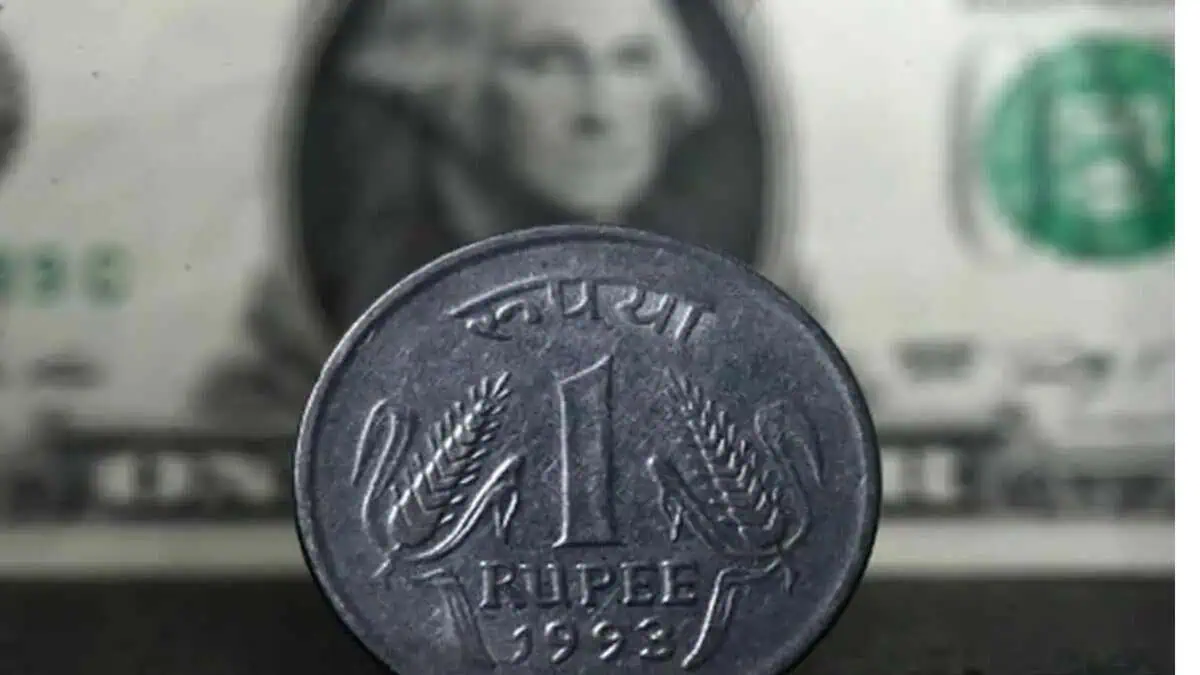
29 December 2025 Punjab Khabarnama Bureau : The Indian rupee, which breached the psychological level of 90 against the US dollar earlier this month, has shown signs of stabilisation, with recent movements indicating that the worst phase of depreciation may be behind, according to a market report by Invesco Mutual Fund.
The report noted, “While it’s too early to call a trend, this development hints at a potential stabilisation in the near term.”
The rupee depreciated about 5.2 per cent year-to-date as of December 19, 2025, making it the worst-performing major Asian currency during the year.
It crossed the 90-per-dollar mark in the first week of December, marking one of the fastest declines in recent times and raising concerns despite supportive domestic macroeconomic indicators.
At the time of filing this report, the rupee is trading at Rs 89.94/USD.
The report noted that India’s economic fundamentals remain relatively strong. Brent crude prices have softened, averaging USD 63.6 per barrel in November, down 14.5 per cent year-on-year, providing relief on the import bill.
Inflation has cooled to below one per cent, while GDP growth surprised on the upside, registering its strongest print in six quarters. Despite these positives, the rupee remained under pressure due to a combination of global and external factors.
The report noted, “The path forward will likely be one of gradual stabilisation as global conditions normalise and domestic strengths reassert themselves. In the larger scheme of India’s growth story, the rupee’s current weakness is a bump, not a bend in the road.”
Key drivers of the rupee’s weakness included persistent foreign portfolio investor (FPI) outflows, a widening trade deficit, elevated dollar demand from import-dependent corporates, uncertainty around the Indo-US trade agreement, higher US interest rate expectations, and geopolitical risks.
FPIs withdrew over Rs 1.55 lakh crore from Indian equities during the year, while merchandise exports fell sharply in October even as imports surged.
The report highlighted that delays and uncertainty surrounding the Indo-US trade deal weighed heavily on investor sentiment. US tariff actions on Indian exports impacted confidence and capital flows more through sentiment channels than direct trade losses.
It says, “We believe the local currency will continue to be under pressure until trade talks take centre stage, foreign money starts coming back and the central bank intervenes.”
However, after touching record lows, the rupee staged a modest recovery from the third week of December, appreciating to around 89.57 per dollar by December 22.
This rebound reflects easing dollar strength, improved risk appetite, and intervention measures by the Reserve Bank of India (RBI), including a USD 5 billion dollar-rupee buy-sell swap aimed at boosting liquidity.
The RBI has allowed a gradual depreciation rather than defending a specific level, intervening primarily to smooth volatility. Meanwhile, the rupee’s real effective exchange rate (REER) has fallen below 100, indicating that the currency has moved from being overvalued to slightly undervalued, potentially improving export competitiveness.
Looking ahead, the report said the rupee’s trajectory will depend on global rate expectations, revival of foreign inflows, clarity on trade negotiations, and overall risk sentiment. While the breach of the 90 mark was symbolic, it does not signal economic distress, the report added, noting that India’s fundamentals, forex reserves and policy tools remain strong, suggesting a path of gradual stabilisation rather than further sharp depreciation.
Summary:
The Indian rupee has shown signs of stabilisation after briefly breaching the 90-mark against the US dollar, according to a recent report. Analysts suggest that the worst phase of volatility may be over, supported by improving market sentiment, easing global pressures, and possible interventions. While challenges remain, the currency’s recent performance has brought cautious optimism to investors.