

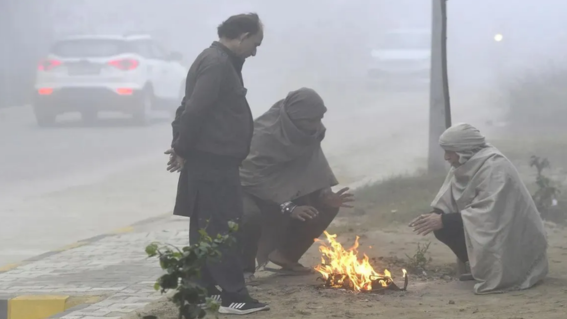
11 December 2025 Punjab Khabarnama Bureau : Large parts of North India continue to reel under an intense cold wave, with temperatures dipping sharply across Uttar Pradesh, Punjab, Haryana, and adjoining regions. According to the India Meteorological Department (IMD), icy winds from the western Himalayan region have led to a significant drop in minimum temperatures, causing severe cold day conditions in several districts. The agency has also issued a dense fog alert for 11 states, warning of reduced visibility and potential disruptions in transportation and daily activities.
In Uttar Pradesh, cold wave conditions have tightened their grip, particularly in the western and central parts of the state. Cities such as Meerut, Bareilly, Agra, and Kanpur witnessed a steep fall in temperatures, with early morning readings dropping close to 4–6°C in several localities. The IMD categorised the situation as “severe cold day” in regions where daytime temperatures failed to rise due to persistent fog and chilly winds.
Punjab and Haryana have reported similar weather patterns. Amritsar, Ludhiana, Hisar, and Karnal recorded some of the lowest temperatures of the season. The biting cold, accompanied by dense fog, disrupted rail and road traffic during early morning hours. Several trains ran late, and motorists navigated through near-zero visibility, prompting authorities to advise caution while travelling at night or early morning.
The IMD noted that a thick blanket of fog formed over North India during the late-night and early morning hours, severely reducing visibility to less than 50 metres in certain areas. Flight operations at multiple airports, including Delhi, Lucknow, and Chandigarh, experienced delays, though most managed to avoid major cancellations. Airport authorities have increased deployment of ground staff and issued advisories for passengers to plan their travel accordingly.
The cold wave pattern is attributed to dry northwesterly winds sweeping across the plains following snowfall in the western Himalayan states. These winds are expected to continue for the next few days, potentially intensifying the chill further. IMD officials stated that the cold wave conditions may persist until a western disturbance approaches the region, which could bring temporary relief.
In addition to the plains, the Himalayan regions of Uttarakhand and Himachal Pradesh continued to remain under sub-zero conditions in many higher-altitude areas. Tourist hotspots such as Manali, Shimla, Nainital, and Mussoorie have seen a surge in visitors hoping to experience snowfall. However, authorities have urged travellers to stay updated on road conditions and weather advisories to avoid being stranded.
The IMD issued a dense fog alert for the next 24 to 48 hours for 11 states, including Uttar Pradesh, Punjab, Haryana, Delhi, Rajasthan, Uttarakhand, Bihar, Jharkhand, Madhya Pradesh, West Bengal, and Odisha. Visibility is expected to remain extremely low in the early mornings, affecting road safety and transportation operations.
Residents have been advised to limit exposure to cold, especially during early mornings and late nights. Medical experts warn that the sudden temperature drop poses increased risks for the elderly, children, and people with respiratory or cardiac conditions. Hospitals across North India have reported a rise in cases of seasonal flu, respiratory infections, and cold-related ailments in recent days.
Schools in several districts of Uttar Pradesh and Haryana have announced adjusted timings or temporary closures to protect students from the harsh weather. Authorities are also making arrangements for shelter homes and distributing blankets to support vulnerable sections of society. Municipal bodies across Punjab and UP are deploying night shelters and warming facilities for homeless individuals, who are most susceptible during cold wave conditions.
In rural regions, farmers are worried about the impact of cold waves on standing crops, particularly mustard, potato, peas, and sugarcane. Agricultural experts indicate that prolonged exposure to frosty conditions can affect yield quality and productivity. However, some crops like wheat may benefit from lower temperatures, provided frost conditions do not intensify drastically.
The IMD forecast suggests that cold wave conditions will continue across the northern plains, with slight relief expected after three to four days due to the influence of a western disturbance. Until then, citizens are encouraged to take necessary precautions, including wearing adequate winter clothing, using fog lights while driving, and avoiding travel during peak fog hours.
As the cold wave tightens its grip on North India, authorities, transport departments, and health agencies remain on alert mode, ensuring safety measures are implemented smoothly. With dense fog predicted to persist, a combination of caution, timely information, and preparedness will be essential for navigating the coming days.
Summary
A severe cold wave grips North India as temperatures drop across UP, Punjab, and Haryana. IMD issues a dense fog alert for 11 states, warning of visibility issues and travel disruptions.