

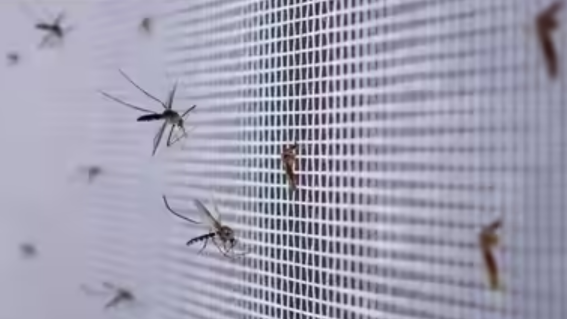
11 December 2025 Punjab Khabarnama Bureau : In an innovative public health initiative, Brazil has begun using specially bred mosquitoes to combat the spread of dengue, Zika, and chikungunya, three of the most serious vector-borne viral diseases affecting millions in the country. This revolutionary approach is part of a large-scale scientific program designed to reduce infections by releasing mosquitoes that carry a naturally occurring bacterium called Wolbachia.
A New Weapon: Wolbachia-Carrying Mosquitoes
Researchers and health officials in Brazil are working with global health organizations to release Aedes aegypti mosquitoes infected with the Wolbachia bacterium. This bacterium is harmless to humans but has a powerful effect on virus transmission.
When Wolbachia is present in mosquitoes, it prevents dengue, Zika, and chikungunya viruses from multiplying inside the insect’s body. As a result, even if a Wolbachia-infected mosquito bites a human, the likelihood of transmitting the viruses significantly decreases.
Over time, these mosquitoes breed with local populations, eventually spreading Wolbachia naturally among wild mosquito communities—creating a long-term, self-sustaining protection system.
Why Mosquito-Borne Diseases Are a Major Threat in Brazil
Brazil has long battled mosquito-borne viral illnesses. The tropical climate, dense urban population, standing water, and rapid urbanization create ideal conditions for Aedes aegypti to thrive.
- Dengue cases have grown dramatically in recent years, with seasonal outbreaks overwhelming hospitals.
- Zika became a global concern in 2015–16 when it was linked to birth defects, including microcephaly.
- Chikungunya causes severe joint pain that can last months or even years.
Despite years of mosquito-control campaigns, pesticide use, and public awareness drives, traditional methods alone have not been enough to contain the rising threat.
How the Wolbachia Method Works
The Wolbachia method, originally developed by the World Mosquito Program, uses a biological approach rather than chemical insecticides. Here’s how it works:
- Mosquitoes are bred in labs and infected with the Wolbachia bacterium.
- Millions of these mosquitoes are released into targeted neighborhoods over several weeks.
- These mosquitoes mate with wild mosquitoes, passing the bacterium to future generations.
- Over time, the mosquito population in the area becomes largely Wolbachia-positive.
- As a result, virus transmission drops sharply, leading to fewer human infections.
This strategy has already shown promising results in several Brazilian cities, where dengue cases fell significantly after Wolbachia mosquitoes were introduced.
Success Stories Across Brazil
Cities such as Rio de Janeiro, Belo Horizonte, Niterói, and Campo Grande have participated in trials or full-scale releases. Studies reported:
- Up to 70% reduction in dengue cases in some regions.
- Decreased need for hospital beds during outbreak seasons.
- Lower incidence of Zika during the 2016 viral emergency.
Brazil’s Ministry of Health has recognized this technique as a scientifically proven, safe, and sustainable intervention and is investing in expanding the project across high-risk regions.
Is It Safe? Experts Say Yes
Scientists emphasize that Wolbachia is:
- Natural – found in over 60% of insect species worldwide.
- Safe for humans – it cannot infect or harm people.
- Environmentally friendly – reduces reliance on chemical pesticides.
- Self-sustaining – once established, it does not require constant reintroduction.
Communities participating in trials have also reported fewer mosquitoes overall due to the altered breeding patterns.
Why This Matters Globally
Brazil’s success with Wolbachia mosquitoes could serve as a global model for controlling vector-borne diseases. Many tropical and subtropical countries—such as India, Indonesia, the Philippines, and several African nations—face similar challenges.
As climate change expands the habitats of Aedes mosquitoes, diseases like dengue and Zika are expected to spread further. Brazil’s innovative biological method shows how science and public health efforts can work together to protect millions.
Future Plans for Expansion
The Brazilian government now plans to:
- Extend Wolbachia releases to more densely populated states.
- Partner with international research bodies for large-scale monitoring.
- Integrate this strategy with existing anti-mosquito initiatives such as fumigation, sanitation programs, and public awareness campaigns.
- Investigate similar biological methods for addressing malaria-causing mosquito species.
If fully implemented nationwide, Wolbachia mosquitoes could help turn the tide against epidemics that have plagued Brazil for decades.
Summary
Brazil is releasing specially bred mosquitoes carrying Wolbachia bacteria to prevent dengue, Zika, and chikungunya transmission. This safe and natural method has already reduced infections significantly in several Brazilian cities.