

05 December 2025 Punjab Khabarnama Bureau : The World Health Organization (WHO) has issued a renewed warning about the rising number of malaria cases and deaths worldwide, signaling a concerning reversal in progress made over the past two decades. The World Malaria Report 2024, released recently, highlights that multiple global challenges—including climate change, humanitarian crises, funding gaps, and drug resistance—are driving the upward trend.
According to the report, an estimated 249 million malaria cases were recorded globally in 2023, marking an increase of nearly seven million from pre-pandemic figures in 2019. Mortality rates have also risen, particularly in low-income and conflict-affected regions where access to preventive measures and treatment remains limited. Sub-Saharan Africa continues to bear the heaviest burden, accounting for approximately 94% of global malaria deaths, with children under five representing a majority of these fatalities.
Key Factors Behind the Rise
1. Climate Change Intensifying Malaria Spread
The WHO notes that rising temperatures, erratic rainfall, and extreme weather events are expanding mosquito habitats. Previously malaria-free high-altitude regions in countries such as Ethiopia and Kenya have reported increasing cases, attributed mainly to warming climates. Climate disruptions also affect agricultural patterns, influencing mosquito breeding cycles.
2. Humanitarian Crises and Population Displacement
Ongoing conflicts in regions like Sudan, the Democratic Republic of Congo, and parts of the Middle East have caused large-scale displacement, undermining malaria control efforts. Refugee camps often lack adequate sanitation, mosquito nets, and medical facilities, creating environments where malaria spreads rapidly.
3. Funding Gaps Impacting Prevention Programmes
Global funding for malaria programmes has stagnated since the COVID-19 pandemic. Many high-burden countries report difficulty maintaining insecticide-treated nets (ITNs), indoor residual spraying (IRS), and rapid diagnostic testing (RDT). The WHO warns that unless funding is scaled up, progress will continue to stall.
4. Growing Drug and Insecticide Resistance
Several malaria-endemic countries have detected resistance to artemisinin-based therapies, the world’s leading malaria treatment. In addition, mosquitoes are developing resistance to widely used insecticides, making traditional prevention methods less effective.
The State of Vaccination Efforts
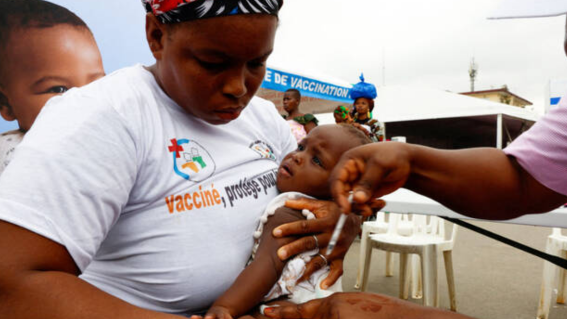
Despite the challenges, the rollout of two malaria vaccines—RTS,S and R21/Matrix-M—offers hope. More than 30 African countries are expected to receive vaccine doses by 2025. Early data from pilot programmes in Ghana, Kenya, and Malawi show a 30–40% reduction in severe malaria cases among vaccinated children.
However, WHO emphasizes that vaccines should complement—not replace—existing malaria control tools. Supply constraints, logistical hurdles, and high demand could delay widespread implementation.
India’s Position in the Global Outlook
India remains one of the region’s key contributors to malaria burden but has shown progress in reducing cases over the past decade. The WHO praised India for ongoing efforts such as distribution of ITNs, adoption of rapid diagnostic kits, and implementation of the National Framework for Malaria Elimination (NFME) 2016–2030.
Still, some states—especially those with forested and tribal populations—continue to report high transmission rates. Climate variability and migration patterns present ongoing threats.
WHO’s Recommendations to Nations
The WHO has urged countries to:
- Strengthen surveillance systems to quickly identify outbreaks.
- Scale up vector-control measures, especially innovative tools like dual-insecticide nets.
- Improve access to effective treatments by supporting community-based healthcare delivery.
- Address climate-related vulnerabilities through targeted interventions in high-risk areas.
- Boost funding from domestic and global partners to ensure sustainable malaria control.
A Global Call for Action
WHO Director-General Dr. Tedros Adhanom Ghebreyesus stressed that while malaria is preventable and treatable, it continues to disproportionately affect the world’s poorest communities. The global rise in cases and deaths, he said, is a signal that “the world cannot afford to be complacent.”
Experts emphasize that achieving malaria elimination goals by 2030 will require both political commitment and significant financial investment. Without urgent action, the gains made since the early 2000s could continue to unravel.
Summary
The WHO warns of rising global malaria cases and deaths driven by climate change, conflict, funding gaps, and drug resistance. While vaccines offer hope, stronger prevention and investment are urgently needed.