

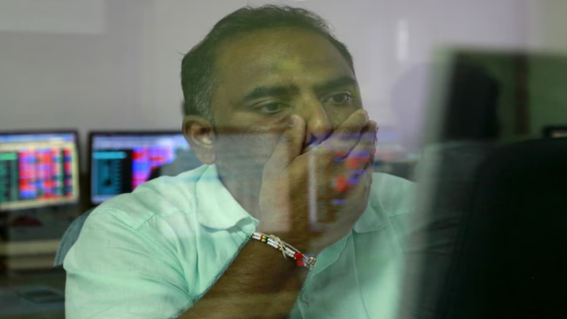
December 3, 2025 (Punjab Khabarnama Bureau) : Indian equity markets opened on a weak note on Tuesday as benchmark indices Sensex and Nifty came under selling pressure amid a combination of global and domestic headwinds. The Sensex dropped nearly 300 points, while the Nifty fell below the key psychological mark of 25,950. The market sentiment turned cautious as the Indian rupee hit a fresh record low against the US dollar, raising concerns about imported inflation and foreign fund outflows.
The day began with Asian markets trading mixed following uncertainty in global economic growth and fears of prolonged high interest rates in major economies. This cautious global environment spilled over into Indian markets, where traders opted to book profits after recent highs. The broader market indices also showed weakness, with mid-cap and small-cap stocks facing moderate selling pressure.
Rupee’s Record Low Adds Pressure
One of the biggest contributors to Tuesday’s decline was the Indian rupee, which slipped to a new all-time low against the US dollar in early trade. The fall was driven by stronger demand for the dollar globally, rising crude oil prices, and US bond yields remaining elevated. A weaker rupee typically impacts sectors dependent on imports, increases corporate costs, and reduces foreign investor confidence.
Market analysts noted that rupee depreciation adds pressure on the Reserve Bank of India to maintain liquidity and ensure currency stability, especially when global financial conditions remain tight.
FII Outflows Continue
Foreign institutional investors (FIIs) have continued their selling spree amid concerns about stretched valuations in Indian markets. Persistent outflows weighed on banking, IT, metals, and consumer discretionary stocks. FIIs have been reallocating capital toward safer assets as global uncertainty remains elevated.
Experts suggest that until FII flows stabilize, Indian markets may continue experiencing volatility, especially in sectors that are heavily owned by foreign investors.
Crude Oil Prices Rising
International crude oil prices have shown an upward trend after reports indicated tighter supply in the upcoming quarter. Higher oil prices pose an inflationary risk for India, which imports a majority of its crude requirements. Rising fuel costs can hurt sectors such as logistics, manufacturing, aviation, and paints, adding another layer of pressure on the markets.
Investors are also wary that higher commodity prices could lead to margins being squeezed for companies dependent on raw materials, making them cautious ahead of quarterly earnings.
Domestic Factors Impacting Market Mood
On the domestic front, traders are awaiting key macroeconomic data including GDP growth estimates, fiscal deficit figures, and manufacturing PMI numbers. These indicators will provide a clearer picture of economic momentum and may influence market direction in the coming days.
Banking and financial stocks led the decline as investors reacted to concerns about liquidity, potential delays in rate cuts, and pressure from rising government bond yields. PSU banks, which had rallied significantly in the past few weeks, witnessed profit booking from traders locking in gains.
Meanwhile, IT stocks also dipped due to the rupee’s volatility and mixed demand outlook from US-based clients amid a slowdown in the tech sector globally.
Sector-Wise Performance
- Banking & Financials: Among the worst hit due to FII selling and concerns about rising yields.
- IT: Volatile due to currency movement and weak global cues.
- Oil & Gas: Mixed performance as higher crude prices supported upstream companies but hurt downstream players.
- Auto: Largely steady, supported by festive-season demand expectations.
- FMCG & Pharma: Saw some buying interest as investors shifted toward defensive sectors during market uncertainty.
Market experts noted that the correction may be short-lived if macroeconomic data remains stable and the rupee sees some recovery. They also highlighted that investors are taking a cautious approach ahead of major global events including the US Federal Reserve’s policy stance and inflation data from key economies.
What Traders Should Watch Ahead
Investors will be closely monitoring a few key triggers:
- Movement of the Indian Rupee – Any stabilization may lift sentiment.
- Crude Oil Prices – Continued rise could dampen market mood further.
- FII Investment Trends – Reversal in outflows could support markets.
- Domestic GDP and PMI Data – Positive data could spark a rebound.
- Global Market Trends – Developments in the US and China will influence the next market move.
Analysts believe that despite temporary weakness, the long-term outlook for Indian equities remains strong, driven by solid corporate earnings, government reforms, and strong domestic consumption trends. They advise investors to avoid panic selling and instead focus on accumulating quality stocks during dips.
Summary:
Sensex dropped 300 points and Nifty fell below 25,950 as markets declined due to the rupee hitting a record low, rising crude prices, FII outflows, and weak global cues.